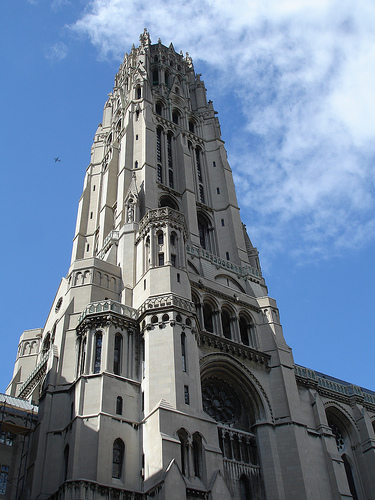
Showing posts with label church. Show all posts

2.16.2014

Welcome to the Gray

Jesus continues his lesson to the disciples in this sermon on the mount. We first encountered the Beatitudes, the blessings of God. Then last week discussed how Jesus’ viewed himself as a fulfillment of the Jewish Law Code, Torah. Today we see a new rhetorical tactic. Jesus quotes the Judaic Law, then he offers a new interpretation. “You have heard it said that way...but I say to you this...” Let us hear now what Jesus has to say.

Matthew 5:21-37

"You have heard that it was said to those of ancient times, 'You shall not murder'; and 'whoever murders shall be liable to judgment.' But I say to you that if you are angry with a brother or sister, you will be liable to judgment; and if you insult a brother or sister, you will be liable to the council; and if you say, 'You fool,' you will be liable to the hell of fire.

So when you are offering your gift at the altar, if you remember that your brother or sister has something against you, leave your gift there before the altar and go; first be reconciled to your brother or sister, and then come and offer your gift. Come to terms quickly with your accuser while you are on the way to court with him, or your accuser may hand you over to the judge, and the judge to the guard, and you will be thrown into prison. Truly I tell you, you will never get out until you have paid the last penny.

"You have heard that it was said, 'You shall not commit adultery.' But I say to you that everyone who looks at a woman with lust has already committed adultery with her in his heart. If your right eye causes you to sin, tear it out and throw it away; it is better for you to lose one of your members than for your whole body to be thrown into hell. And if your right hand causes you to sin, cut it off and throw it away; it is better for you to lose one of your members than for your whole body to go into hell.

"It was also said, 'Whoever divorces his wife, let him give her a certificate of divorce.' But I say to you that anyone who divorces his wife, except on the ground of unchastity, causes her to commit adultery; and whoever marries a divorced woman commits adultery. 

"Again, you have heard that it was said to those of ancient times, 'You shall not swear falsely, but carry out the vows you have made to the Holy One.' But I say to you, Do not swear at all, either by heaven, for it is the throne of God, or by the earth, for it is his footstool, or by Jerusalem, for it is the city of the great Ruler. And do not swear by your head, for you cannot make one hair white or black. Let your word be 'Yes, Yes' or 'No, No'; anything more than this comes from the evil one.

Teach us to choose blessing
and life rather than death, O God,
so that we may walk blamelessly,
seeking you
through reconciliation with all of your children. Amen.
___________________________
Men, how many of you have had your wife ask while looking in the mirror, “Does this dress make me look fat?” By the sound of the laughter I suspect that most of you have enough wisdom to answer regardless of what you really think, “Of course not, Honey! I don’t know what you’re talking about! You’re gorgeous.” Women, how many of us have asked our husbands questions with impossible answers? 
Or how about this one, your grandchild offers you a self portrait that looks more like someone threw-up finger paint. How do you respond? “Wow! What a fabulous artist you are. Thank you so much.”
So what about these little white lies? Are they wrong? One of the Ten Commandments is, “Thou shall not lie.” Yet all of us are guilty of this simple excursion away from God’s code of ethics. Is this wrong?
When Moses descended from Mt. Sinai with the Ten Commandments, he carried on the tablets general dictates about behavior. Keeping Sabbath, Preserving Life, and Honoring God formed the crux of these new rules.
The Israelites were just freed from slavery under the Egyptian Pharaoh, and they needed practical guidance during their desert wanderings to the Promise Land. This law code was offered in a particular context for a specific people group. 
Fast forward a few hundred years and we arrive at our Gospel Lesson today. Jesus continues his Sermon on the Mount, having just told his disciples that he is the fulfillment of the Law—not the end of it. Naturally, he begins to reinterpret the well-known commandments, explaining this idea of fulfillment.So he touches on a few hot topics: murder, sex, divorce, and swearing/taking oaths. 
You have heard it said, “Thou shall not murder. But I say to you, why would you ever allow your anger to get to that point in the first place?” How can sacrifices in the temple be authentic, if they are offered with hard hearts? How could the ancient Israelites testify to God’s goodness when their inner conflict trumps that of Rome’s? Jesus is drawing a familiar but antiquated law into his first-century context. Instead of the law generally stating “do not murder.” Jesus moves into the crux of the matter. Deal with your anger. Do not let arguments and grudges fester. Ask for and offer forgiveness. Then murder won’t be an issue.
Then he tackles adultery, lust and divorce. “You have heard it said, ‘Thou shall not commit adultery.’ But I say to you, betrayal is more than sex and secrets.” Again, we see him turning to something that every Jew on the hillside that day would have understood. It was not about jabbing out one’s eye or literally cutting off a hand because we might sin with it. Instead, Jesus redefines what it means to lust or express infidelity. Jesus radically brings concern of women into this conversation. We tend to lose this in our own contemporary context where women are clearly apart of the adultery and lust conversation. Further, “You’ve heard it said ‘“Whoever divorces his wife let him give her a certificate, but I say, don’t divorce unless there is infidelity.” In the first century men could divorce their wives without cause or reason. They received a certificate so that they were not wrongly murdered for adultery, but they lived the rest of their lives without care. Jesus was saying, “Stop leaving women by the roadside when they no longer suit your needs.” He did not want men to cast aside their “property” of wives without regard with their well-being.
So often the Jewish people in the New Testament get a bad reputation in light of situations like this. We tend to view their religion as rigid and uncompromising, as if it was a black-and-white approach to otherwise complex life scenarios. A harsh mix of dogmatic rules and inconvenient lifestyle practices. But I think we miss a really important part of Jesus with this mindset. On the contrary, Jesus’ fulfillment of the Law brings it back to life for his followers. Jesus keeps it relevant. He considers the cultural setting of his followers, and he helps them make sense of something ancient. In other words, Jesus reminds the disciples that the Law is about life. Torah was given to the Israelites for protection and connection with a life-giving God. 
Through the fulfillment of Jesus, the Jewish people were reminded of this truth. The Ten commandments are not meant to answer every question we have today in twenty-first century America. If we turn with legality to a law code that was composed for a specific people group thousands of years ago, we get into trouble with major misunderstandings. The same is true even if we rely on Jesus’ new interpretation in the first-century. 
You have heard it said, “Thou shall not lie.” But I say to you, “Men, choose life! Tell your wife that indeed, she is thin and beautiful. Grandparents give life to your grandkids! Praising those abstract portraits. Choose life! Choose it for yourself and your marriage and your family.” 
When Jesus shows us how he fulfills the law, he gives us permission to understand the work of God in our cultural and timeframe. So, it is not about Jesus teaching things that are wrong, nor does it mean we have to understand Jesus literally. Jesus welcomes us to the gray areas of life, and says, “Even here, you can experience abundant life under the reign of God.” Jesus gives us room to discover liberation in the limbo of everyday.
So as we get caught in situations where these is no clear right or wrong, consider what is best for preserving relationship with the people we serve and love. Instead of approaching conflict with uncompromising certainty, is it not gentler and more productive to consider the deeper causes of the conflict? We must ask, “What gives life?” If there is no guidebook for how to navigate a certain scenario we might ask of our options, “What gives life?” 
Let’s consider two situations in our culture today. Divorce is quite common. 50% of all marriages end in divorce, right? Does this mean that we are outside of the covenant of God’s law? Well, if we take Jesus literally, it does. But we are rejecting that interpretation, remember? Otherwise we would all be without our eye and hand and on our way to a burning hell for calling a friend foolish. However, if we follow Jesus’ example, we can discuss divorce with a modern perspective. 
We have under our belts the nineteenth amendment, the women’s liberation movement of the 1970’s, and continued breaks in the corporate glass ceiling. Women no longer need protection as a divorced person because they are no longer a piece of their husband’s property. Though divorce still has a negative connotation, it does not need to. Of course it is devastating and heartbreaking when relationships fail. And there are ongoing negative impacts of broken marriages that children must unfairly endure. On the other hand, when an abusive marriage further destroys the spouses, or when children are caught in ongoing verbal cross-fire between their parents the family does well to ask, “What gives life?” And if there is more abundance outside of the marriage, then perhaps divorce is the best option. Not the perfect one, but the most life-giving in that particular place at that particular time. Do you see how Jesus sets us free to respond to life in ways that enhance it rather than bind it up with rules? 
Where else do we need to confess that life is not a black-and-white representation of good or bad, right or wrong? In what areas of gray, can we experience growth and choose life while still serving the law of God? How about church? There is no right or wrong way to do and be church. How we act as church on Taylor Blvd. in South Louisville can and should be quite different than how surfing wine drinkers in Northern California might experience church. If Jesus were sitting here with us today, how might he expand the Ten Commandments even further to empower our church to choose life. How can Lynnhurst church offer life to her community? How do we express our faithfulness as a contemporary church? There are lots of ways...but perhaps that is another sermon for another time. I invite you to think on this more. 

Ultimately, we have a choice. Just as the Deuteronomy Lesson we heard today also indicates. We can choose life or death. We can choose to cling tightly to an ancient law code–either Moses’ or Jesus’ —that ultimately will result in death for us contemporary followers. Or we can choose life. We can find ways to imagine God’s law in the context of our community. We can continue enlarging the reign and love of God for all people. It might get murky at times, and it does not erase the pain or trauma of no clear solution. But in the end, the Law and love of God always gives life. Lynnhurst, let us together choose life! 

5.08.2012

Kristof at Church

When I saw the video that Nicholas Kristof posted on Facebook yesterday I was shocked that the link carried me to a set housing Kristof and Senior Pastor Bill Hybels on Willow Creek's main stage. (bizarre that I highlighted their 'sanctuary' in just my last post.)

It also comes on the cusp of this article, an anthropologist arguing that if liberal politicians would simply tweak some of their language they would in little time with minimal effort win over a large chunk of evangelical voters. My husband, brother, and I have been in an e-conversation about whether or not one can differentiate fundamentalists from evangelicals in this context. However, I bring it up to say that the Kristof video is a fascinating experiment in liberals and conservatives mixing company, and doing so well.

I see Nicholas Kristof as a modern day prophet. His work, in the company of his wife Sheryl WuDunn, on gendercide, sex trafficking, and female empowerment in the developing world inspires even the most cynical. He speaks for the marginalized by sharing the story of the individual with the masses to effectuate a response among the privileged, and he does so by derailing the (ab)use(s) of poverty porn; he upholds the struggling women and girls with dignity and awe... And a difference he makes.


Bill Hybels sits beside him in the video clip with a beautiful tan that I assume he picked up while sailing on his yacht. Despite my ambivalence about megachurch efforts to seek social justice causes (who knew that some of them are trying to now), Hybels warrants more respect from me than any other evangelical pastor because he makes so much effort to grow alongside his congregation. He does not claim a monopoly on (conservative) theology; he does not participate in trendy/swanky/hipster-y culture topics that circulate regularly in evangelical subculture (consider Rob Bell, Mark Driscoll, and that dork in TX who are all obsessed with sex these days). I see Hybels as more concerned with following God and winning lost souls to Christ in ways that are relevant and transformative for suburban chicago-ites. He's less concerned with being cool. He tries really hard to be a good, authentic evangelical. It just so happens that it has also made him a lot of money, and pretty cool in his circles, in the meantime.

Hybels reads Half the Sky, and it's clear by the time he gets to the second question in this video interview with Kristof that his world is turned upside-down. Hybels cannot finish articulating many of his initial questions. (I've never heard Hybels say, "uh..." when public speaking.) He doesn't know where to go with all the dramatic facts about gendercide and prostitution and plights of women in a global context. The viewer sees him repositioning his body several times during the interview as if to speak on behalf of the thousands of followers in the congregation, "we are all uncomfortable with this. We don't talk about things like this in here. This isn't the individualized, hyper-pious, feel-good mantra we are used too...but keep talking, because we need to know and respond to this. Educate us, Kristof." And in his generous, unassuming, incredibly kind way, Kristof fields the questions, engages the congregation, and puts Bill at ease. I find it astounding and worth emulating. Not that I wanted Kirstof to bury Hybels or Willow Creek for just now waking up to these "liberal" issues, we just don't ever see these groups in dialogue because it is so uncomfortable. I was nervous at several points in the interview, and Kristof kept putting me at ease too with his graciousness and authenticity. Neither leader was trying to be someone other than who they were, and it worked.

Hybels' honesty, Kristof's generosity and intellect, tempered by a setting that is willing to be uncomfortable for the sake of their gospel is moving. The first time I watched the video I was annoyed with Hybel's naiveté. (Because I already have this all figured out, right?) The second time I was overcome with emotion at his earnestness to grapple with such realities. Issues that even many liberals cannot acknowledge. The third time I watched it I cried with Hybels at the end when he asked Kristof why he does this work and  Kristof responded about the Polish nun in Congo.

It starts small for Kristof. It's the grain of yeast and the mustard seed. It's telling the story of one woman in one country. It's reaching out to one church in one suburb. It's writing one op-ed for the Times in an effort to conjure up a response. And it's all so damn honest and humble. Kristof speaks, and writes for that matter, with no pretense. I want to be best friends with him and his family. I want to drink wine with them at the dinner table during transformative conversations that run late in the night. I want to travel to Cambodia with them. I want to learn from them and work with them. I want to know the women that he knows. And since I must do so indirectly through his work and vicariously through other higher profile people (like Bill Hybels even), I'll take what I can get. I can't believe I'm saying this, "Thanks Willow."

I won't even get in to how Kristof is a contemporary, married, privileged, educated, white, male redeeming so much for me by way of each category I just plugged him in to. So thank you, Kristof, for living from your heart and sharing it in ways that minister with peace.

Disclaimer: as tech savvy as mega-churches are, it's unfortunate that I cannot embed the video. I am not sure how long it will be accessible on Willow's website. And no, I did not watch the other videos in their current series on Hope. --Don't want to ruin a good thing, know what I'm sayin'?

4.27.2012

Paradox: Time or Space

Just recently have I allowed Abraham Joshua Heschel into my reading repertoire. Perhaps I did not know of his works earlier because of evangelicalism. Perhaps I did not read him when I first began learning of him because of a complacency in my own shallow knowledge of Holy Land disputes. Perhaps there are other reasons that don't really matter. But a few weeks ago while I was unable to lay down Israel: An Echo of Eternity, I found myself processing much of the philosophical and theological genius therein.

This work he wrote in the immediate aftermath of the Six Day War, and in the introduction his daughter confesses that so much of his intensity and sheer (arguably blind) devotion to his subject matter—Israel—may have been tempered by a later awareness of the condition of the Palestinian people had he not died prematurely. But this isn't really the focus of my thoughts anyway...too involved, intense, and polarizing for this simple blog.

Early in his argument, Heschel drops this bomb of genius, "To ignore the paradox is to miss the truth." He offers the example of a brief quote from Solomon's inaugural speech for the temple in 1 Kings, "The Lord dwells in thick darkness." A beautiful statement in an of itself, is it not? Heschel marks that although the Shekinah is everywhere, the experience of it is always somewhere because humanity always lives at a particular place. Here's an extended quote:

Living truth is the blending of the universal and the individual, of idea and understanding, of distance and intimacy, the ineffable and the expressible, the timeless and the temporal, body and soul, time and space. Even those who believe that God is everywhere set aside a place for a sanctuary. For the sacred to be sensed at all moments everywhere, it must also at this moment be somewhere.

A few pages later, the point strikes me vividly. It's a point that I, and my fellow post modern Christians, value beyond that of our former generations. It's a point that I beat loudly on a drum myself but received in a new pattern of reverberations at this hearing: "God is no less here than there. It is the sacred moment in which God's presence is disclosed. We meet God in time rather than in space, in moments of faith rather than in a piece of space."

I'm not enough of a scholar to fully unpack this. And I totally take his ideas out of the context of Jerusalem and apply them to contemporary church. Plus, as I consider further the idea of God-in-time before God-in-space, I must celebrate the gift of such awareness.

For those of us who find suspect ideas of anything absolute, especially truth(!), how freeing to think that more than some rational, modern, industrial approach to God's presence marking a place holy or not, God created not the temple first, but the Sabbath. Time. Moments to participate in the divine no matter the space. What a fabulous deconstruction of sacred and holy. (Reminds me of Jesus healing on the Sabbath.)

Here comes a gross over-simplification of such a beautiful idea, and yet, it's this practical situation that brings Heschel to life for me...

I think this is why I struggle so desperately to care about the missing sterling silver, custom-made, totally gorgeous, and yet stolen/missing/neglected communion ware that is so holy and sacred to my current church. I wish I had a photo of one of the goblets; they are amazing. And without taking time to describe the detail with which they were designed and the money they represent, I will say that the team of congregants responsible for their care offer no hesitation in defending their sacredness. To not handle these worship supplies with the utmost reverence and gentility is to defame all that the church represents. No hyperbole intended!

As worship director I continually had to negotiate a balance between the volunteers who so highly value these elements and the building services individuals who actually cleaned them as they would any other dirty cup of juice. As the volunteers themselves struggled to articulate what it is they actually ascribed to these pieces of shaped silver, I found myself fully able to empathize with their concern over something so special to the life of their church. On the other hand, I was/am wholly unable to understand the theological errors in such thinking. Had they known of my irreverence for such pieces of worship, errrr, expensive cups competing with God in stature, our relationship may have been marred—the concern for this part of worship undoubtedly this intense. How does such mis-shaped thinking originate?

I think one way is by limiting God to a certain space. In this case, communion is only special, i.e. sacred, if served
with the pristinely polished, silver cups. (Nevermind the fact that they make the juice taste like metal.) with the 'right' liturgy.
with the elements of the meal resting atop a meticulously ironed brocade cloth.
with the ministers seated in sturdy throne-like chairs in front of them.
and I could go on describing the ritual.
a ritual that in my opinion, which I never shared out of respect for those with whom I partook of the meal, is boring, out-of-context, and way too long.

So much so, that God-in-time collapses for me during this liturgical element that ought to be so central to the life of the church. (Here's where I get really honest) the elements of this ritual where I find God most manifest (the communal aspect, the humility, the simplicity and ordinariness of the act, etc.) are absent because of the damn silver. As I find myself longing to see/taste/hear/feel/sense God move, instead, all I hear is the clanking of the cups on the trays.

To ignore the paradox is to miss the truth, Heschel reminds me.

The paradox, especially one of faith, is uncomfortable and takes much effort to appropriate! But upon such integration sets free the believer to grapple with and explore more deeply the transcendent mystery of God. We are free to value the silver cups for the beauty of their design, celebrate the blacksmith artist who crafted them, and yes, collectively mourn the fact that tourists steal them because they are just that cool. But we are not limited in our divine encounters during a holy meal of remembrance and grace. The point is not lost if we allow ourselves the tension of paradox. We can remember that it's not the cup we honor but a carpenter servant who most likely offered the wine in some type of generously used, bacteria-infested, wooden goblet. The point is that we honor the carpenter.

So if the sacred is not partial to the secular, nor is it distinct from the secular but everywhere holy, then I want to embrace the totality of that Presence so fully that I do not miss it for fear of it seeming too misplaced.

At the end of his book, Heschel nearly comes full circle with this statement,

Are customs and ceremonies, are services and sermons, an adequate antidote to the massive dehumanization, to the emerging monsters of absurdity?...Ritual, loyalty, theology, remain deficient unless there is an ongoing responsiveness to the outbursts of immediate history, our own situations.


Being alive means being exposed to contradictions and defiance, facing challenge and disappointment. Religion may die when its truth becomes trite—its poetry a conceit, its observance inane. Truth becomes half-truth; worship, comfort; belief, vapid...To have faith is to be in labor.


And as a woman who types this while seven months pregnant, anticipating the arduous, joy-infused road to and of labor, all I can say is, "holy fuck." I'm alive! I'm in the middle of a really intense situation, and the church's rituals are dying. They labor not on the things of God but the accoutrements of this world. And the paradox is forgotten... the truth is being made trite...


(Congratulations if you bothered reading all of this rambling!)

4.17.2012

I was surprised

The Christian Century recently featured an article on new ways of doing church outside the confines of denominationalism and traditional ordination requirements for their clergy. Duh.

Sometimes I wonder about these mainliners and their disconnect with culture—stuff Evangelicals have been in-tune with since their inception—things like technology, modes of churching, trendy ideas about theology. In part it's their theology that limits their interaction with culture, right? On the other hand, it's one of the reasons so many of their churches are flailing. Surely we can update ritual and liturgy without the end goal being to bring more people to 'salvation.'

Regardless, this issue of the CC annoyed me for a few reasons. One of the ideas featured in the article was a young person barista-ing at Starbucks as a way to meet new people and hopefully invite them to Bible Study. Really? This is as far as we have come in our ways of re-branding church? I find this insulting to the regulars of said coffee shop and completely arrogant on the part of said barista. What happened to serving coffee just to serve coffee? Why do the motives have to be so calculated and manipulative? ...how...how...well, how Evangelical. Why must church center on bringing people in? And if that's the goal (which I'm not favoring), then why can't you be direct about it? Why use Starbucks? And like I said, realize that this is not a new tactic. My funda-gelical childhood church used Krispy Kreme donuts fifteen years ago.

Secondly, the conversation about ordination was intriguing. Many of the leaders of new church movements are young, not yet ordained, but serving in leadership that traditionally requires such credentials and set-apart-ness. The holy collars themselves are blessed, aren't they? As the denominations themselves are struggling to remain vibrant and relevant (mainline and evangelical ones), they are now forced into re-evaluative roles regarding the legitimacy of such 'unorthodox' leadership. I'm glad they are finally asking these questions, again, even if they are about  thirty years behind culture. Who knows what will come of it.

In the meantime, I'm beginning yet my second job in ministry (this August) that would normally desire one who is ordained, but because so many (out of the church) care less about parish life and ordination these days, I am the hire regardless, I suppose. Pickin's are slim. That's not forced humility. That's a statement about how I find it weird that they are so okay with the fact that I'm not licensed or ordained. The first draft of the press release listed me as Rev. I actually want to be ordained but can't make it happen (been working on it for about five years now) because of all the ridiculous stuff one has to do in addition to the degree. Where is the balance? Why are the reins held so tenaciously by those in power?

Your churches are dying people! You have young people with new ideas, and you won't let them in because they ain't allowed to wear the stole yet, and they can't wear the stole yet because you worship your rules and regulations. Stop putting the protocols before the relationships.

Alas, the church continues to miss the point. What's new? Perhaps my surprise at how those of us mainliners who still care about the future of the church cannot critically engage her more. So I leave half-empty/half-filled (still depressing either way) worship services wondering how much longer the numbers will dwindle and how many more churches-turned-condominiums New England and New York will see in the next thirty years.

I'll have an iced grande decaf light mocha, hold the inauthentic community bible study. Thanks.

3.20.2012

That Bitch is Gettin' Ripped Off

I had a few classroom experiences in seminary that will stick with me through the remainder of my life. This is one of them that I've been processing again in light of a homeless person I worshiped with at work.

I like the Message version of Luke 21's opening verses,

Just then he looked up ask saw the rich people dropping offerings in the collection plate. Then he saw a poor widow put in two pennies. He said, "The plain truth is that this widow has given by far the largest offering today. All these others made offerings that they'll never miss; she gave extravagantly what she couldn't' afford--she gave her all!"


I was raised by my preachers and Sunday School teachers to extol this poor woman for her generosity and sincerity, her willingness to give-up something comfortable to show her devotion to God. Is this not what Jesus is doing in highlighting her deeds? hmmm...maybe...


My wealth and poverty professor told a story of reading this passage with a group of homeless people one evening in an intimate and urban discussion group. Prepared to offer an eloquent diatribe on the woman's gift, one of the more unkempt men in the group blurted out before my prof could begin, "That bitch is getting' ripped off!"


I absolutely think he's right. The text doesn't tell us what she was going to use the money for instead of offering it to the collection, but we can safely assume she wasn't saving for a new luxury car. She was poor and socially isolated. Probably eating a little less bread that evening as a result of her gift. Is that really what God requires of us? To go hungry or neglect our immediate needs in our devotion? She lived in a culture that devalued women, especially widows, and the religious establishment should have served as a place of refuge and acceptance. A place where she not only encountered dignity and respect, but charity and support. Is this not what God wishes for the disenfranchised--to find a home among those who have the means to offer support from communal a system of acceptance and value?


The pericope directly preceding this parable goes a bit like this,


With everybody listening, Jesus spoke to his disciples, "Watch out for the religion scholars. They love to walk around in academic gowns, preen in the radiance of public flattery, bask in prominent positions, sit at the head table at every church function. And all the time they are exploiting the weak and helpless. The longer their prayers, the worse they get. But they'll pay for it in the end.


The pericope directly after the widow parable begins with this,


One day people were standing around talking about the Temple, remarking how beautiful it was, the splendor of its stonework and memorial gifts. Jesus said, "All this you're admiring so much--the time is coming when every stone in that building will end up in a heap of rubble.


Okay, so we know in the latter part that Luke is predicting the death of Christ. But I think the point in the former pericope remains in the second as well, what or who are we worshiping? Are we serving our rituals? Our buildings? Our charismatic leaders? Our hope in sounding good, reliance on big words, and our fancy worship services? Awesome that the poor widow enters into the middle of this discussion and is arguably ripped off by all those who say they actually worship the Creator but miss the significance of Jesus' teaching here. And that even today with all of our scholarly approaches to our sacred texts, it isn't until we read and interact with the marginalized people themselves that we see a new point to this story--we continually miss the point of what it means to be a faith community.


Here is my struggle today:
These pictures show Riverside's front doors and outer entryways on Riverside Drive. Check out the detail in the chiseled limestone. They are stunningly gorgeous. The stone carvers were hired intentionally by Rockefeller because they were an impoverished immigrant family from Italy at the turn of the twentieth century. 


I'm not going to walk you through the who's who of the stone carvings beyond saying they represent inclusivity and progressive Christianity. You can see a small line of  urban towers in the first pic that represents both Jerusalem and New York. One of my Riverside books highlights that "the building is dedicated to a living ministry and to the glory of God." 


However, the large wooden doors, that I am very thankful are kept ajar during the day, are dry rotting. So, if for no other reason, should we spend thousands of dollars maintaining the building given the good she represents, who she stands for, and the artists who created her? Or is the $800,000(!!!) that has been budgeted for 2012 to restore the exterior wooden doors serving something or someone other than God and God's people? 


I have no idea. 


Fast forward to just a few weeks ago. During our Wednesday evening gospel service the homeless who regularly hang out in the building often attend this service for the community and soup supper. As we were short on ushers one particular evening I was carrying the collection plate from person-to-person. My homeless friend I mentioned at the start of the entry dropped a single quarter into the plate this night. It clinked as it hit the side of the plate. $.25. That's all. That's all that was had. I saw the person digging deep into a pocket for it. I had to pause with the plate for a moment while the paper wrapped around it was removed. The lump in my gut lurched up into my throat. I was glad for the opportunity to remove myself from the service to drop the collected offerings into the counting bag and then into the safe with the escorting help of a security guard. (Yes, we take our offerings very seriously.) The quarter was the only coin, most of the other spontaneous donations were 10's and 20's. This particular individual has been living in the church hallway for several weeks.


All I can think, "That bitch is gettin' ripped off." 


P.S. In know way am I accusing Riverside of not caring about her community. I just wonder where we are to draw the line that demarcates the love for our buildings and art more than the needs of God's people. Damn these issues of the heart.

3.07.2012

Space | Place | Haste

First: Haste
Do you ever want to tell people to freakin' slow down?

Warning: this post is really random and covers about six topics.

I think this idea alone significantly spurs on my love for the elderly. Perhaps I've written on here before of my devotion to old-man-professors. (My husband will be one soon enough after all.) I completed my entire undergrad degree under the tutelage of an 80-year-old spiritual genius who swam in the school pool every morning at 5am. My favorite professors in seminary were the soft-spoken grandpas. My favorite congregants in the church are the cranky and authoritative, but supremely loving senior women. I preached a sermon once at PMC and the opening line was "Old people rock my world."--it was a very young congregation. With life comes experience comes wisdom comes a level of self-security that the rest of us only dream of. Maybe this is one reason, aside from the brittle bones, that you rarely need to tell a senior citizen to slow down. If we are not going to take the time to listen, then the loss is ours. I want NYC to get this holy concept.

Enter The Riverside Church.

I won't take time speaking of its architectural splendor, Rockefeller's endowment, her majestic organ and carillon, nor do I plan to take up your time with stories of limestone carvings that can bring tears to your eyes, a golden Jesus suspended from the ceiling, and the pulpiteers who positioned it on the ecclesial map of churches to follow. It's all on the website anyway. The parts of this community that I most love and adore are the elderly members doing their best to keep it alive.

As I just begin to process the sixteen months of my employment in this community (I wrote that cover letter after all so many months ago), and as I view the stained glass of the Nave first thing from my bedroom windows every morning, I am struck time and again at the amount of space the building itself covers on Manhattan Island.

Second: Space
Remember there is no room on Manhattan, at least not unless you have a small (or gigantic) fortune to actually afford housing here. Most of Manhattan-ites live in nooks so small, in buildings so high it leaves the rest of the country stunned dizzy. Side note: We managed to find one small cranny of Central Park where if you situate your eyes at a specific perspective during the proper time of blossoming Spring with your body half-reclined into a contortion underneath a willow tree, there are not any skyscrapers in view. It's actually quite astounding for the fraction of a second that you can hold the twisted pose. Compare this to the view from the top of 30 Rock. (I refuse to pay the fee to elevate up to the peak of the Empire State Building.) The buildings that stand so majestic, threatening to pierce the sky, even a tree cannot block from view, from below they quickly shrink from the peak of one still taller. Yet, from the top of 30 Rock one can view in the northwesterly direction the spires of the Riverside tower as it borders the Hudson River. Something so triumphant and erect looks small and fragile. We lose this perspective in the haste of our daily living here in NYC. Everything around us becomes bigger than life--I wonder if because our time and space is so minimal.

One more bus to catch, subway doors to hold ajar, taxis to hail, groceries to manhandle for three more blocks, kids to bark across the avenue, complete strangers offering advice on how to parent, wind whipping your scarf in ways that blind you...the exhilaration and energy bustling in the streets literally never stops. I love it. But the rushing gets tiresome. The crowds overwhelming. The difficulty of running errands difficult to negotiate. So much so, that one easily loses perspective on the ways the rest of the world meanders about. It often makes me want to recreate the Ferris Bueller Sears Tower scene with forehead pressed against a glass panel a mile up in the sky to silence the busyness below into ant-like maneuvers of survival. That's what the top of 30 Rock does. You can only escape life-of-crazy by going up.

Until you meet the senior citizen residents of Manhattan.

Moving up the crowded sidewalks of Broadway with a walker immediately slows your world down to normalcy. Crossing a mega-avenue with a shuffling friend in icy weather creates more time to see all that I miss when chasing the kids on their scooters. Understanding the time that elapses between destination points when entering a crowded bus with a wheelchair only occurs to me when I'm inconvenienced by it as a fellow rider. Noticing the mundane of life sometimes feels next to impossible here. And yet, I claim that the simplicity of life is where I see God. No wonder I have missed this while living here, yes God and simplicity. My friends at Riverside have unknowingly done well to keep this alive for me on our lunch outings and through conversations about the trials of urban dwelling for those who are differently abled, but unable to leave the island.

Can one still find enough space and
can one slow down their haste enough to
create a sacred place in such a frenetic race

Third: Place
Wendell Berry is my brother's guru. (This and this are two blogs he started and maintains. That's him playing cricket with his King's College team in London on the second link.) Berry along with other great writers like Richard Rohr and Tich Nhat Hanh speak to the imperative of having a place--a home. In a reflection on the genius of Berry, after having spent an intimate Sunday afternoon with Wendell and his wife, Tonya, in the kitchen of their Kentucky farm home talking coal and other lofty agrarian topics, my brother writes the following,

We had been standing on the porch for several moments noticing the sheep on the southwest side of the house. We also noticed the vertical climb from the riverbank one must make to arrive on the porch...The aesthetics of the place reminded me of him, harangued, but in a good way. Everything here had a purpose and had been used and lived in. I aspire to live in my place as well as the Berry family appeared to live in theirs...When I put questions on the table I was consistently baffled by how smoothly he picked them up and dealt with them. We were sitting with a master of conversation. The work necessary for being as such had been done in the quiet of his own home and fields. It would be silly to try and name-drop and click through power point slides in his presence. Your only option is to be honest and thoughtful and, well, honest. As we sat in his kitchen for those several hours there was probably more silence than talking. It was ok to be quiet here. So often, there is nothing to say and yet we blandish each other with worthless chatter about how impressive we are. 


                                                        (Mr. Berry on his farm, Lanes Landing)


Might we all be so able and ready to create a place for people that welcomes silence, entertains new friends, and creatively speaks to the mystery of God at work. To think so deeply, live so consciously, and welcome so graciously proves daunting when we cannot slow down or find enough space to be ourselves, much less know ourselves. Unhurried living that celebrates community when it seems as if the space for such does not exist. As Berry taught this to Kyle, this is what the strident and savvy NY women at Riverside have helped me to learn and embrace. I'm convinced this is where God lives in Manhattan. Even if there is not enough space, God's place resides anyway. I'm glad to have met her here in this way of still, lingering lunch dates, intentional conversation, and ardent spirituality. What a surprise.
 

7.13.2010

What goes around comes around

Whenever I take the time to reread some of my earlier posts on here I am always amazed at how when I am a few months removed from their original publication date (because I am a slacker at staying disciplined with my writing), the earlier thoughts seem more like prophetic predictions rather than a rambling. I almost say out loud, "Yes! That's so true! I had no idea I have been feeling this way for so long." Or instead, I think, "You're just figuring this out? You said the same thing like two years ago."

The bit that just knocked me over with accuracy this time is the comment from an April posting where I casually said that I'm done with church. I said it in the April post more as a demonstrative, provocative thought that challenges even me, but stands actually, I guess now, as an inner leaning. I still struggle to readily confess it. (I'm not being very clear right now.) But today, July 13th, 2010, I really mean it, I think. (At least let me still claim somewhat of a modifier, errr, reluctance in naming it.) I am done with church!

It feels bogus.
It feels insincere.
It seems to be more a place of hurt and isolation rather than healing and wholeness.
I struggle to find community within its walls.
I hate the male leaders behind the pulpits of power and prestige
I hate what conservatives have made the cross mean to people in other traditions, or in no tradition.
(I also think it should be illegal for crosses to be suspended over an interstate or erected in ridiculously oversized proportions!)
What are considered to be stunning and beautiful cathedrals represent to me only modernity/analytical approaches to apologetics/rational and intellectual descriptions that erase the mysteries of faith, men on power trips, and quests for more status, money, baptisms, staff, volunteers, etc. all in the name of Jesus.
I am royally pissed by all of it today.

In case you couldn't read that into the above gerunds.

I'm ticked because for the last few years I've been longing to engage in urban ministry. To find space creatively where there is not enough to go around. To promote greener ways of living with rooftop gardens, shopping locally (easy enough in the city with local farmer's markets--no Target in Manhattan), among other things. Here I am living in Morningside Heights, Manhattan. An area that bridges everything I oppose--the divide between rich and poor. It falls between the limits of the Upper West Side where many of the creme de la creme of NYC reside and the boarders of Harlem, one of the countries largest ghettos. Liv plays soccer on one of the Cloister's lawns--a beautiful area owned by the Metropolitan Museum of Art that lies even farther north of Harlem and Washington Heights. To get there, we pass through a social justice nightmares. Hundreds of high rises that are subsidized and I imagined to be rat and insect infested beyond recourse. Plus, I live on the same property/block as one of the most gorgeous and emphatic churches in the country. This church was built by Rockefeller at the turn of the century intentionally in Morningside Heights to bridge this economic and racial divide in the city. The steeple stands several stories high so that it can be seen still in the every growing NYC skyline. It has a lovely social ministry to the people of the area who are in need. (Or at least that's what I hear and have read about earlier times in the history of the church). I literally see the gorgeous stained glass windows that line the aisles of the sanctuary from my bedroom window first thing every morning.

This church is hiring a minister right now. The cover letter sat on my desk for WEEKS. Finally I had a huge meltdown with Tyler about it a few days ago b/c I need a job and we need some money. (Sallie Mae is on a manhunt for me!)

Here it is. My dream practically being served to me on a silver platter.
New York City
Riverside Church
Morningside Heights
Urban Ministry

And yet...
And yet I'm too angry.

I can't apply, and I won't apply. I refuse to contribute to the institutionalization of the family of God. (So there, says the four year-old inside of me.)

When I look at the towering steeple all I can think of is that line from Shrek when Shrek and Donkey encounter Lord Farquard's gigantic castle. The Lord is a dwarf standing only 2.5 feet tall when at attention. Shrek sarcastically mutters to donkey, "Think he's trying to compensate for anything?"


So now, I have no idea what I'm supposed to do with all this finally admitted anger, hurt, and frustration. I have never felt so cynical before about anything, much less, one of my greatest loves--the church. Can it still find ways to be the people of God?

If so, then why the fuck are there so many highrises of poverty just blocks away this famous institution? Did I mention that is famous for defending civil rights in the '60's, laying the foundation of American homiletics in the '20's and '30's, and finding a way to merge races in their own pews in the '70's and '80's. Why are there still so many tires floating in the Hudson river near the church's property? Why does the subway leave her underground tunnel to face the light of day on a rusted bridge just two blocks north of said steeple? (How kind of those engineers to leave the exhaust and pollution from the train in the air for the poor people instead of building them a tunnel through their city blocks.)

Okay, I'm shutting up now. I'm ticked. I'm tired of the bullshit of just talking about social justice in the church and then nothing ever really gets accomplished because the rich white people are too busy laying out and itemizing all of their principles and beliefs and ideals instead of going to fish some tires out of the river. And if there are people fishing tires out of the river, where the hell are they? I want to help.

The End.

3.09.2009

Prophetic Words

Tomorrow is our church staff meeting, and I have to lead a discussion on prophetic preahing. Each time we meet we close with a ten minute ditty or so on a different topic for our own edification and learning. I'm going to share about when I was in James Forbes' preaching class at Yale. At the time, we was still the pastor of Riverside Church. To say that the class was wholly transformative is still an understatement. My text for the class was James 4:4-10 and the assignment was to preach a text that would usher in the next American Great (Religious) Awakening. Forbes gave us a masterful sample sermon one class session in which he relied on Ezekiel redressing the skeletons of dry bones way down in the valley to describe what it will be like when we awaken from our religious slumber here in America. It was five years ago now, and I still remember his command of the room like it was yesterday. I still feel the pulse of his energy--fabulous!

This has me thinking about lots of things. First, I don't think that we are necessarily in need of a huge revival as they were led by George Whitefield, Charles Finney, and Jonathan Edwards back in the day. And not that that was what Forbes was advising, but there still seemed to be somewhat of an "us vs. them" mentality in the class. Us Christians, us social do-good-ers, us seminarians vs. you ???? losers who need religious help ???. Anyway, I approached my sermon text with this framework and automatically set myself for some intense criticism without even realizing. "Friendship with the world is enmity with God." --that's part of the James pericope. ha. Well, I took it and ran with it...ran it right into the gound rather than into the hearts of all my listeners.

Granted some of my classmates were a bit snobby--we were at Yale after all, and a few of them were just so dang liberal they didn't even know what hit them (or the books of the NT in order for that matter-the horror!), while the others just obligingly sat there as I embaressed myself for a full 15 minutes thinking I was going to be the best damn prophet they'd ever witnessed (aside from our professor of course!).

One guy on the class response sheet handed it in blank except for a brief fragment at the bottom reading, "I don't believe in anything you said." WOW! How's that for sharing the love of Christ through some peer-to-peer constructive criticism?! I can honestly laugh at it in my reflections now, but at the time, I was pissed beyond words. Not hurt or intimidated, just stark raving mad. Who did he think he was---plus he sucked at his delivary. But lest I needlessly get lost on that tangent, I'll get back to my point-I do have one here. The class had been shocked that I would make such bold claims as I did in that sermon. And to be honest, when I reread it now I am a bit surprised by my doctrinal confidence as well; I'm no where near that person today. Yet, on the other hand I still find the sermon inspiring on a certain level.

Yet, leave it to the master. After I finished preaching, Dr. Forbes had me reread the scripture passage for the class. Instead of approaching it with a vengeful or dramatic disdain, he had me read it with remorse and longing. You could have heard a pin drop when I finished reading it the second time. Ahh....it was more safe for them to listen at that point. I started to get it. On the other hand, as I near the end of my time in evangelical Fuller world, often a place where people are not bashful about dropping a judgment bomb or critique from God, I find myself more in the middle. I don't want to sugar coat harsh teachings from the Gospel to spare feelings, but I also don't want to alienate people needlessly. It's a very, very fine line.

2.24.2009

Wading

So many people I know right now, most of whom I'm related to, are wading through murky waters of disillusionment with institutionalized church. And while I welcome this dialogue, even thrive on the potential that such disenchantment raises, I can't help but internally get a little panic-y and rant, "No! No! Don't be done with it! Don't give up." But then those who are ecclesially frustrated begin to relay a plethora of anecdotes that have taken place in the confines of the local church over years of service and ministry. Eventually the ignorance, frustration, and poor theology that is espoused in the stories only leaves me feeling a bit nauseated and fat, i.o.w., heavy hearted and sad right along with them. Dang! Why is that?! 

On a different, yet still related note, I listened to this fantastic podcast yesterday with my ole NPR buddy Krista interviewing a mother-turned-rabbi who was advising parents about the ways of inculcating spirituality in the life of their children. We are born with an innate awareness of a spirituality or mysticism that extends beyond ourselves and is part of the greater cosmos, the rabbi reports, that eventually prompts all/most young children to begin asking questions of their origin, along with reasons for pain and injustice in the world, tempered with more specific queries like 'who is God' and 'why should I believe in God.' (Not that any of that information is really all that new, just that I loved her response.) The rabbi says the point is not so much about answering our children's questions correctly, so much as it is about cultivating a vocabulary that promotes future dialogue about things spiritual and mystical. In a similar vain, I tend to agree with her when she espouses ways in which spirituality and a spiritual language is best developed and enhanced--not so much through our words or doctrine, but through our acts. (duh!) 

Even today in my philosophy class, we were discussing speech-act theory and how postmodern philosophers finally (almost) agree that language is performative. We don't know what a word means unless we understand the act that accompanies it. So, when I want to teach my children that injustice in the world is a problem, I hope that less then hearing me drone on ad infinitum about it, they will see me treating the homeless person with dignity, or we can together mourn over the loss of one of God's creatures when we see it on the side of the road, etc. 

And back to my initial point, is this one of the reasons so many of you are done with church in the modern sense of the word? Instead of having all of your doctrine well-articulated in a rational, uniform thought pattern (with words that have lost meanings), and instead of obeying the denominational "rules" about how one ought to conduct oneself in a given worship service or prayer meeting (with actions that are void of relevance), and instead of hounding members about their time availability and whether or not they are going to tithe 10%, why do our churches not embrace more radically the mystical elements of life with God? Why do we not less about indubitable faith propositions and more about intense questions of divine immanence and intervention, or how to live as community in American suburbia, and the list goes on? I, too, am tired of churches getting lost in the translation of what it means to be church. 

And as I debate denominational affiliation these days (more to come on that later), I find myself caught in the --dare I use the word 'trap'-- of going through the motions myself, of doing church the same old way. And for what, just to call myself "ordained," or is it because ordained pastoral ministry really is an authentic representation of church, i.e. family of God representing Christ to the world? hmmm. (Sorry if this sounds too cynical; I hope my message isn't hidden too far beneath it. I'm mostly just wondering.)

8.13.2008

A New Church Find

This is what I'm talking about these days--a church that embraces plurality in the name of their unity, cares about the poor, is lead by women, and is open and affirming to everyone! United Parish Church of Brookline, MA just accounted for the 251st reason that I want to move to Boston! It's a merger of three churches originally in Brookline: American Baptist, United Methodist, and United Church of Christ, all of which were struggling on their own. They joined together in the '70's, maintain even today their separate denominational affiliations so that when someone joins, they pick which denomination they're joining, and they busy themselves with social work that extends well beyond the walls of their sanctuary. (Oddly enough, the Baptist Church was sold and deconstructed for a new development, and the Methodist church is now condos in the original structure, not an uncommon New England site at all!) Okay, the last thing is that the senior pastor graduated with her M.Div. from Harvard Div School where for her senior thesis thingy she did a project on New Monasticism in the late 80's. Pretty cool...

7.05.2008

Photo Project

I just found this photo blog through another blog that I visit fairly regularly on style and design. The pictures are from a project the photographer did on mega churches. Some of the photos are really interesting, and some of them show how the church can just as easily fall into the trap of being excessive, not unlike we do in our homes. Check it out; unfortunately, i can't cut and paste any of the images here.

3.07.2008

Skid Row

In case anyone hasn't yet seen the short films on LA's Skid Row at goodmagazine.com, then here you go. They are moving. I'll paste the first one for you right here to get your started.


I wonder why my church is not better at responding to the needs of the homeless as a unified body. One theory I have is that so many of our members are justice workers by vocation each day of the week. Large numbers of them work tirelessly in the non-profit sectors, or in public classrooms, or in a larger/foreign mission field, and even in the court rooms defending the public individuals society longs to condemn. In this way, by the time everyone gathers enough energy to begin yet another grueling week of the "Lord's work," many arrive on Sunday mornings weary and even exasperated at times. Our church feels tired to me in general these days. The energy seems more focused on surviving this transition and individuals more so on surviving their jobs. It does not leave much time or enthusiasm for small (or large) ways that we can respond to the conditions of the poor in LA or Pasadena as a group.

Personally, I wonder what my position is in all of this--this fatigue, this call to fight for justice both individually and collectively, and the issue I have with our church not serving well together. I am certainly not doing anything to rectify it or offering any solutions of group service opps. I feel this burn that we need to get our asses out there as a church, together as people of God serving Jesus and therefore blessing the world, but where to begin? It's a daunting question, especially after watching films like the ones on Skid Row. This is why I am convinced this must happen through the church, and more at hand, through our church.

This Sunday I'm leading a few elements of worship in the service and one of them is the congregational prayer--one of my favorite parts with which to help. This is going to be one of the things I pray about. That we might find ways to serve God (read: the world) as a whole body, each using our own gifts to glorify the other, and in turn, honoring God. Isn't that what it's all about. Sort of like my community question below--why are we not very good at this sometimes if it's what we are created to do?

FluSchmoo


Life is a bit off kilter these days. Tyler, Livia, and Jude are sick. Livia started it and Tyler rounded out the threesome earlier this afternoon with the sneezes, nose runs, coughing, and slight fever. I am the most worried about Jude, of course; he's the littlest. I told the pediatrician yesterday that I just need a standing appointment each week, and then I will merely cancel if I don't need to come. She laughed and simply affirmed that Jude is going to make it through these first few months soon.

I love newborn babies. I love them swaddled and clean and snuggled close. But geesh, they are so dang stressful. Who knew eating, sleeping, and pooping could be such a challenge? And such an emotional one on the moms? Sometimes I wish I could just birth out a six month old (minus the trauma of actually birthing the poundage of a six month old).

Anyway, lunching with two good friends today proved to be a nice distraction from the nasal drips though. One of the things we chatted about was the adventure it is to keep relationships alive and meaningful in ways that extend beyond the surfacey or mundane aspects of life. Be it in marriage, familial bonds, or friendship, it seems all too easy at times to slip into patterns of coping and habit rather than navigate the ups and downs of life together, on the same team, sharing evenly the emotions of a moment. Why is this? If we are creatures of community, why can dwelling in life-nourishing community be such a challenge? Oh wait!-because we are all dorks, all damaged, and all defiant (Rick Warren would be proud of that alliteration).

This comes on the heels of our community group break-up as well. The ten of us had a fabulous DTR session last week and decided that we don't want to ruin a good thing by forcing something to continue that just isn't in the cards for any of us right now. So we parted ways amiably. But what it basically seems to boil down to is that distance had crept into our community making it difficult to be regular in attendance, honest in discussion, or fruitful in encouraging one another. Within a year we were divided and motley.

Again, if community is something that my generation so desperately craves and values, we sure do suck at it sometimes. Is this because we haven't seen it modeled very well? Or are there more reasons? And keeping in tandem with a familiar reverb in my home today-Ah-choo! (Excuse our fear to be vulnerable and receive vulnerability.)

3.02.2008

Transition

Duuring the sermon this morning at church, our good friend Joel articulated each point of transition our church is already enduring or preparing to experience in the coming months: 1) The senior Pastor, Jim resigned two years ago, 2) a volunteer pastor of several years, Bert, resigned a few months ago, 3) Our interim lead pastor, Katherine, was diagnosed with breast cancer a few weeks ago and is currently undergoing surgery recovery and pending treatments, 4) Our children's pastor, Kristina, announced that she and her husband are leaving this summer for a move back to the midwest, and 5) Our associate pastor, Jennifer, is leaving in April.

What in the world? Our congregation is a few hundred members so it will be interesting to see in the coming months how we begin to handle the changes. I am curious to see what the church will look like on the other side of this. What does God have in mind for this sundry mix of disciples?

As I see this unfolding from the pew as an attender, and as I speak more personally with Katherine and Jennifer. I am continually amazed at how God is using the oddest moments to continue nudging me forward in the direction of vocational parish work. I find this season of ecclesial change exhilerating and intriguing, certainly not stressful or overwhelming. There is so much opportunity for vision casting, for finding new ways to bless the world with fresh voices and new insights, and for ministering to one another in unique ways as we all worship through this migration to a new place together--as one big flock of wandering sheep in need of shepherd. When will it be my turn to shepherd? Not yet, God says. Oh, but when?...and where?