Soon after we left LA and arrived in NYC I sat in the balcony of the St. James Theatre trying to contain my weeping as I watched American Idiot.
The expression of anger and indignation resonated so powerfully within my core that while we were eating at Sardi's afterward (a hilariously dated and overpriced restaurant down the street) I could only identify with the depressed, couch-dwelling character of the show (stage right throughout).
(I couldn't find a video of the entire opening number, "American Idiot;" so if you have one send it my way.)
The jolting onset of intense media action,
jarring electric sound, and
head-banging choreography awoke in me this intense rage
against the Man.
against war.
against chaos and disaster.
...arguably themes of the show and album.
And yet, like Rent will always reveal for me, the community that was broken and re-created from the shambles of atrocity and terror shows a depth originating from no kind of kindness--it's one that only stems from piecing together what's left after a bomb erupts and shatters the foundations of our lives.
This clip is annoying in the transitions but does well to throw you through the moods of the show.
They sing, "welcome to a new kind of tension...where everything is meant to be okay."
Is it...going to be okay?
I don't think so.
Hence the new tension of which they sing.
Living as it is okay or is going to be okay and denying the hurts and addictions of life. We who love this musical reject this notion and therefore resent this tension.
My last few entries of 2010 on this site hint at my emotional upheaval and confusion with everything I thought to be so certain. Taking too literally (and personally for that matter) foundations and ideas like Romans 8:28, "And we know that all things work together for good to those who love God and who are called according to God's purpose." Not that it's complete bullshit, but more like, let's keep things like this in context, right? And this idea too--keeping scripture and other writings in their proper genre and contextual paradigms--is a simple approach for mainliners but a theological breech for evangelicals. (I'm getting lost on a tangent.)
Getting back to the point: I value naming the tension, especially when it's a really profound one like seeking life in a world where everything is alright. First of all, how boring. Second of all, how dysfunctional!
Instead, let us break through to a new tension, one that's more honest and life-giving. I want to live not in the aforementioned tension of naiveté and ignorance of pain. Nor do I claim a tension of healthy lifestyles and extreme greed (as promoted by the American media, and highlighted in the musical) while ignoring the needs of the world's poor. Instead I claim a tension that flows from concepts like loving in the midst of hate. Not an eye for an eye, but loving the enemy.
So as I reflect back on my posts of 2010, on articles that have infiltrated The New York Times in the last forty-eight months, along with the overarching condition of humanity (here's where I get all existential) I wonder what empowers us to embrace the tension of living fully and with hope, particularly in the reality that things are not okay, and maybe won't ever be in this lifetime.
Chatting with some friends during dinner last weekend, in regards to their ongoing work with the urban poor population and efforts to eradicate the situation entirely I asked what keeps hope in their future alive. I want to know where they go for restoration. Similarly, a dear friend who works at Bread for the World, an anti-hunger organization, expressed a relief from the rigors of fighting an uphill battle through religion. An elderly African American lady who worked as narcotics rehab officer during the 1970's in NYC spoke to me of her faith providing sustenance. Something to still believe in at the end of the day. I agree, and yet, I still wonder--
How do we hope (through the power of Jesus, or our higher power, or the prospect of Enlightenment, or whatever fills this blank in your sentence)...how do we hope for things to be made well while maintaining integrity and awareness to the realities of life?
Did Neitzche simply name what the rest of us fear, "Religion is an opiate for the masses"? Do we hope in the intervention of a Higher Power so we can get some rest at night, in tandem with the prescribed Ambien? Or does God really reach out in saving acts of grace? If God exists to love and be loved as love, a love so bold and refreshing that all fear is truly cast out, where do I find this? What does this mean? I want proof.
My previous answers to this are what crashed when I wasn't looking.
And full circle back to the music of Green Day, it's worth getting angry about the ways American youth are jolted around in a schizophrenic quest for peace. Our institutions of family and church (to keep the list short) fail us. Yet, I wonder if when redefined and re-imagined in our current cultural mix-up, might these be a few places to hope freely in and work for a radical world where things will be just that...okay. Talk about a new kind of tension.
I don't want to be an American idiot. But I wouldn't mind being an idiot for something that authentically lives the realities of hope and love amidst trauma and loss. Let's just be honest about it. It's unpredictable.
Showing posts with label theodicy. Show all posts
Showing posts with label theodicy. Show all posts
3.06.2012

4.21.2010
Unravel this Mystery for Me
The ability that all of us humans carry to inflict hurt and pain on one another leaves me indignant sometimes, and at others, I just feel like rolling my eyes as I lament, "Get over it! We're all abusers." The fact of the matter is that we are abusers. We all long to be known and feel threatened when we are not. We put ourselves out there in relationship with our humans and if our needs are not met, or our insecurities feel unmatched, or our vulnerabilities dominated then we protect ourselves by throwing down our attacker. Sometimes we do it on purpose, like middle school girls jockeying for the proverbial top rung on the social networking ladder. Other times, and probably more commonly, we hurt the people we love without realizing it.
An overly aggressive word to our spouse in a heated argument,
the inability to accept a friend's dysfunctional state,
or belittling the person whose stereotypes and assumptions do not match our own.
Yet, it's all on a spectrum isn't it? Some people hurt more than others, and others seem to never hurt at all. However, I'm talking about those of us who live supposedly "normal" lives as we walk around with our issues and struggle with how best to give and receive love inspite of them, but also giving and receiving pain in the meantime because of them.
This makes me sad. It leaves me feeling cynical and violated. I feel naive and foolish for thinking that love is a mystery that conquers all fears. Doesn't true love trump the desire to hurt, even when we might feel over-exposed?
Buddhism has four central tenants--the Noble Truths as they have come to be called:
1. Suffering comes up in everyone's life.
2. This suffering is caused by craving.
3. We can stop suffering by stopping craving.
4. To stop craving, follow Buddha's path (basically and in a Christian lens, follow the Golden Rule and seek spiritual experiences through meditation).
Christianity claims that God is love and perfect love casts out fear.
Hmmmmm....
And God is a relational God, isn't that what the Trinity is about? Paul Knitter writes that the most "fundamental, deepest truth Christians can speak of God is that God is the source and power of relationships." In God we live, move, and have our being. We exist through relationships that center on knowing, loving, and giving since that's how God exists. It's about community. Where is God in our readiness to abuse?
I abstractly believe Paul when he wrote that there is one God above all things, through all things, and in all things. God promises never to leave or forsake God's created people. So in loving our friends, we are engaging in the work of God and living God's life (another point Knitter makes).
...And yet...
And yet we still crave and consequently suffer as well. Cravings so deep that Buddha says we are willing to suffer as we hope for their fulfillment. Or we're even willing to cause others to suffer.
The duality that ensues from this has let me down. Perhaps we should thank modernity for the duality. I like that Buddha teaches that instead of some Transcendent Other, or as Paul Tillich said a "Ground of Being," God can be viewed as the "Ground of Interbeing" (ala Knitter). In other words, God needs us as much as we need God.
Before you label me a heretic, hang with me. I'm trying to make room for evil, I think. Abuse is evil. People intentionally or unintentionally hurting other people seems evil.
Tracing back to Buddha, he says that wisdom comes when we are awakened to the reality that everything is interrelated. But you can not achieve this enlightened, wise perspective without compassion. We are all interconnected with one another; we cannot see both sides of the coin and pick just one and claim enlightenment. Either we care about our neighbor as much as our self, and vice versa, or we are not wise. Again, it's essentially the Golden Rule.
Knitter explains that "One's self becomes one's self-power. One's self-power becomes an expression of Other Power, as a wave is the expression of the Ocean...There is no individual self that can be neatly identified and that acts by itself. There is just interconnection, InterBeing, InterBeings. Lyotard, much later, said that no man is an island. Thomas Merton titled one his genius works this.
So, we are a confluence of good and evil in this sense. No one is 100% abuser or 100% abusee. No on is all perpetrator or all victim.
And as a Christian, I want to say through the teachings of Jesus and by the power of the Spirit we are able to experience a sense of groundedness that yields inner peace, as well as a sense of connectedness/InterBeing that produces compassion for others. When we are living our insecurities, fears, and therefore hurts, and we malign other beings with whom we are innerconnected, we are not at peace with ourselves and lacking wisdom. We are living out of our selfish cravings and therefore suffering with a lack of peace. In this sense, we are abusers.
The ways in which we live are the ways in which we meet the Creator God, or fail to meet the Creator God.
So that, the more I give and love and create and celebrate with and for other people whom I both love and do not even know, I more fully experience the utter mysterious presence of God at work in the world and in all people. It's not through the abuse that God is most manifest, but in the healing and wholeness that can still come in the aftermath of such destruction.
And in this way, God needs us. God needs us to respond abuses on a personal and global level so that God can be made manifest in the wake of evil!
(Sorry if this post makes no sense at all. I'm in process here...)
An overly aggressive word to our spouse in a heated argument,
the inability to accept a friend's dysfunctional state,
or belittling the person whose stereotypes and assumptions do not match our own.
Yet, it's all on a spectrum isn't it? Some people hurt more than others, and others seem to never hurt at all. However, I'm talking about those of us who live supposedly "normal" lives as we walk around with our issues and struggle with how best to give and receive love inspite of them, but also giving and receiving pain in the meantime because of them.
This makes me sad. It leaves me feeling cynical and violated. I feel naive and foolish for thinking that love is a mystery that conquers all fears. Doesn't true love trump the desire to hurt, even when we might feel over-exposed?
Buddhism has four central tenants--the Noble Truths as they have come to be called:
1. Suffering comes up in everyone's life.
2. This suffering is caused by craving.
3. We can stop suffering by stopping craving.
4. To stop craving, follow Buddha's path (basically and in a Christian lens, follow the Golden Rule and seek spiritual experiences through meditation).
Christianity claims that God is love and perfect love casts out fear.
Hmmmmm....
And God is a relational God, isn't that what the Trinity is about? Paul Knitter writes that the most "fundamental, deepest truth Christians can speak of God is that God is the source and power of relationships." In God we live, move, and have our being. We exist through relationships that center on knowing, loving, and giving since that's how God exists. It's about community. Where is God in our readiness to abuse?
I abstractly believe Paul when he wrote that there is one God above all things, through all things, and in all things. God promises never to leave or forsake God's created people. So in loving our friends, we are engaging in the work of God and living God's life (another point Knitter makes).
...And yet...
And yet we still crave and consequently suffer as well. Cravings so deep that Buddha says we are willing to suffer as we hope for their fulfillment. Or we're even willing to cause others to suffer.
The duality that ensues from this has let me down. Perhaps we should thank modernity for the duality. I like that Buddha teaches that instead of some Transcendent Other, or as Paul Tillich said a "Ground of Being," God can be viewed as the "Ground of Interbeing" (ala Knitter). In other words, God needs us as much as we need God.
Before you label me a heretic, hang with me. I'm trying to make room for evil, I think. Abuse is evil. People intentionally or unintentionally hurting other people seems evil.
Tracing back to Buddha, he says that wisdom comes when we are awakened to the reality that everything is interrelated. But you can not achieve this enlightened, wise perspective without compassion. We are all interconnected with one another; we cannot see both sides of the coin and pick just one and claim enlightenment. Either we care about our neighbor as much as our self, and vice versa, or we are not wise. Again, it's essentially the Golden Rule.
Knitter explains that "One's self becomes one's self-power. One's self-power becomes an expression of Other Power, as a wave is the expression of the Ocean...There is no individual self that can be neatly identified and that acts by itself. There is just interconnection, InterBeing, InterBeings. Lyotard, much later, said that no man is an island. Thomas Merton titled one his genius works this.
So, we are a confluence of good and evil in this sense. No one is 100% abuser or 100% abusee. No on is all perpetrator or all victim.
And as a Christian, I want to say through the teachings of Jesus and by the power of the Spirit we are able to experience a sense of groundedness that yields inner peace, as well as a sense of connectedness/InterBeing that produces compassion for others. When we are living our insecurities, fears, and therefore hurts, and we malign other beings with whom we are innerconnected, we are not at peace with ourselves and lacking wisdom. We are living out of our selfish cravings and therefore suffering with a lack of peace. In this sense, we are abusers.
The ways in which we live are the ways in which we meet the Creator God, or fail to meet the Creator God.
So that, the more I give and love and create and celebrate with and for other people whom I both love and do not even know, I more fully experience the utter mysterious presence of God at work in the world and in all people. It's not through the abuse that God is most manifest, but in the healing and wholeness that can still come in the aftermath of such destruction.
And in this way, God needs us. God needs us to respond abuses on a personal and global level so that God can be made manifest in the wake of evil!
(Sorry if this post makes no sense at all. I'm in process here...)
5.10.2009
What is God?
This is fascinating. I like it. Compare it to Barbara Brown Taylor's idea of God, which is the end of my last post.
This is the stuff that really makes me excited about pastoring! Notice the question is "What is God?" but most of the people answer the question, "Who is God?". Not quite sure what to make of that.
Pluralism at its best!
This is the stuff that really makes me excited about pastoring! Notice the question is "What is God?" but most of the people answer the question, "Who is God?". Not quite sure what to make of that.
Pluralism at its best!
4.28.2009
A Buzz Word about God
Since I am graduating in seven weeks, yes, seven weeks (!!) I have been entertaining off-and-on a resurgence of life questions. What is my denomination? Do I believe in denominations? Why am I not already on a path to ordination? Should I not have an ordination service following the week of the commencement festivities? Where will I pastor? In what context? Shouldn’t God have already worked all this out?! I am twenty-eight, after all!?
Birthing two kids in the middle of my degree has offered me a bit of permission from God (myself, really) to let up on the how’s, why’s, and when’s in place of some more favorable peace. Surprisingly, as life grew busier, the peace became more present. When all of the above questions were hovering around like a poisonous bee at the start of my seminary tenure I thought I was going deaf from the numbing ZZZZZZzzzzzzzzz of where is this education leading? The loud buzzing never really went away, but as life progressed, it did drop down to a low dull so that I could proceed through life. Now that damn bee is back and the buzzing can be heard at decibels so electrifying I wonder when our nosy neighbor is going to call the cops for noises in our apartment louder than city ordinances permit. (Maybe I just have mental illness.)
Anyway, I have initiated several conversations with various people in the ministry and my family with the hopes that their guidance will numb the sound. They are people whom I trust and consider wise on such subjects like what the hell is God doing with my life. Their opinions have slightly varied and their ideas of what would be best for me are even sundry, yet one element of the dialogue has remained consistent amidst all my questions and anxiety (again, mostly self-imposed).
God loves you.
Hurumph. I usually huff a little and slightly audible sigh, feeling perplexed wanting more clarity about the here-and-now and not really wanting to continue such an esoteric line of thought. Then I think, actually God’s love is extremely tangible. That’s when my shoulders relax a smidgen. My breath comes a bit deeper on the next inhale, and I reluctantly remember this profound reality. Yes, God loves God’s people.
God did not bring me this far in life, with a husband, two kids, an (almost) advanced degree, various life experiences across the country, etc. to suddenly say, “ummm…yeah, good job on the grades at seminary, Lauren. You’ve arrived. You are now a Master of the Divine. So….yeah, good luck with all that. See you in a few years at the next resurrection.”
Sometimes I tend to think that’s the case, given what I’ve learned and misunderstood about process theology and practical theology and everything in-between that discusses how God may or may not interact in the world. However, everything inside me screeches (or wants to stand) against that.
 Liv loves the book “Moo, Baa, La La La” by Sandra Boynton. (A great children’s poet!)
It goes:
A cow says, “Moo!”
A sheep says, “Baa!”
Three Singing pigs say, “La! La! La!”
“No, no,” you say. “That isn’t right.”
The pig says, “Oink!” all day and night.
Rhinoceroses snort and snuff
Three little dogs go, “ruff, ruff, ruff.”
“Quack,” says the duck and a horse says, “neigh.”
It’s quiet now.
What do you say?
No! No! I say to God, “This isn’t right!” you love us still, to our delight.
(Sorry, I suck are rhyming.) Which is code for, God’s not going to forget about us (i.e. me). Or anyone for that matter, even if you are marginalized and deprived of certain human rights. (Do I even have the right to say that? That’s a whole ‘nother post for a later time. We’ll see if I still believe that after a trip to Cape Town later this year.) even if you are in the midst of foggy transition that rates low on the frontal visibility scale.
So yes, my life seems to be transitioning, the bee is buzzing, and yet “it’s quiet now.” What do I say? The opportunities are many and the possibilities somewhat limitless. What a tremendous, inexplicable, unmitigated gift! Truly. Who am I to query about it being otherwise simply because it’s a bit vague and full of ubiquitous ambiguity right now?
It’s quiet now. What do I say?
Well, I’m a bit too overwhelmed really to say much at all. I speculate that my husband is as well since he’s on a parallel existential track of life-purpose. Good timing we’ve got, eh? At least one of us in the marriage could be a stabilizing force. Oh well. ☺
Instead, I think I will permit the golden Barbara Brown Taylor to once again, use her magical powers of clear and metaphorically enhanced articulation to speak for me.
In response to Terry Gross’ inquisition about her underlying assumptions of the word/image of “God,” as she perceives and believes it to exist, Taylor inspires me with this.
“When I say the word, “God,” I am so aware that I’m using a code word…I suppose my own image, my own idea of God as imperfect and evolving as it is, right now, would be the glue that hooks everything together. The consciousness that moves between all living things…I do not envision a large person…I envision instead some (a slight pause) presence so beyond my being. A presence that both knows the stars by name and knows me by name as well. That is not here to be useful to me, that is not here to give me things as much as to ask me to give myself away for love …but when I say I believe in God, I trust. I trust in the goodness of life, of being. I trust that beyond all reason. I trust that with my life.”
To give myself away for that love…That love which is God’s-self. So then I think, duh. I can do that. What’s so hard about that? And then I’m awake all night wondering about that. Geesh (wink, wink).
(I wrote this on my flight to DC. Expect a follow-up soon, post-trip.)
Birthing two kids in the middle of my degree has offered me a bit of permission from God (myself, really) to let up on the how’s, why’s, and when’s in place of some more favorable peace. Surprisingly, as life grew busier, the peace became more present. When all of the above questions were hovering around like a poisonous bee at the start of my seminary tenure I thought I was going deaf from the numbing ZZZZZZzzzzzzzzz of where is this education leading? The loud buzzing never really went away, but as life progressed, it did drop down to a low dull so that I could proceed through life. Now that damn bee is back and the buzzing can be heard at decibels so electrifying I wonder when our nosy neighbor is going to call the cops for noises in our apartment louder than city ordinances permit. (Maybe I just have mental illness.)
Anyway, I have initiated several conversations with various people in the ministry and my family with the hopes that their guidance will numb the sound. They are people whom I trust and consider wise on such subjects like what the hell is God doing with my life. Their opinions have slightly varied and their ideas of what would be best for me are even sundry, yet one element of the dialogue has remained consistent amidst all my questions and anxiety (again, mostly self-imposed).
God loves you.
Hurumph. I usually huff a little and slightly audible sigh, feeling perplexed wanting more clarity about the here-and-now and not really wanting to continue such an esoteric line of thought. Then I think, actually God’s love is extremely tangible. That’s when my shoulders relax a smidgen. My breath comes a bit deeper on the next inhale, and I reluctantly remember this profound reality. Yes, God loves God’s people.
God did not bring me this far in life, with a husband, two kids, an (almost) advanced degree, various life experiences across the country, etc. to suddenly say, “ummm…yeah, good job on the grades at seminary, Lauren. You’ve arrived. You are now a Master of the Divine. So….yeah, good luck with all that. See you in a few years at the next resurrection.”
Sometimes I tend to think that’s the case, given what I’ve learned and misunderstood about process theology and practical theology and everything in-between that discusses how God may or may not interact in the world. However, everything inside me screeches (or wants to stand) against that.
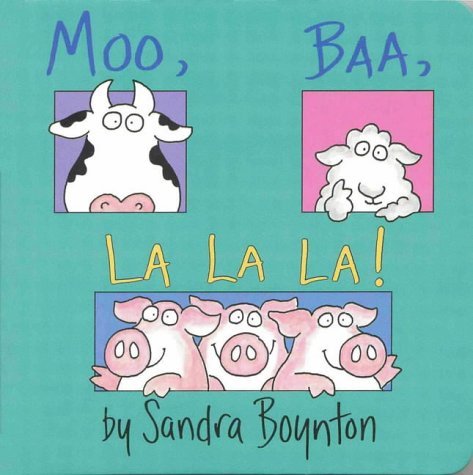 Liv loves the book “Moo, Baa, La La La” by Sandra Boynton. (A great children’s poet!)
It goes:
A cow says, “Moo!”
A sheep says, “Baa!”
Three Singing pigs say, “La! La! La!”
“No, no,” you say. “That isn’t right.”
The pig says, “Oink!” all day and night.
Rhinoceroses snort and snuff
Three little dogs go, “ruff, ruff, ruff.”
“Quack,” says the duck and a horse says, “neigh.”
It’s quiet now.
What do you say?
No! No! I say to God, “This isn’t right!” you love us still, to our delight.
(Sorry, I suck are rhyming.) Which is code for, God’s not going to forget about us (i.e. me). Or anyone for that matter, even if you are marginalized and deprived of certain human rights. (Do I even have the right to say that? That’s a whole ‘nother post for a later time. We’ll see if I still believe that after a trip to Cape Town later this year.) even if you are in the midst of foggy transition that rates low on the frontal visibility scale.
So yes, my life seems to be transitioning, the bee is buzzing, and yet “it’s quiet now.” What do I say? The opportunities are many and the possibilities somewhat limitless. What a tremendous, inexplicable, unmitigated gift! Truly. Who am I to query about it being otherwise simply because it’s a bit vague and full of ubiquitous ambiguity right now?
It’s quiet now. What do I say?
Well, I’m a bit too overwhelmed really to say much at all. I speculate that my husband is as well since he’s on a parallel existential track of life-purpose. Good timing we’ve got, eh? At least one of us in the marriage could be a stabilizing force. Oh well. ☺
Instead, I think I will permit the golden Barbara Brown Taylor to once again, use her magical powers of clear and metaphorically enhanced articulation to speak for me.
In response to Terry Gross’ inquisition about her underlying assumptions of the word/image of “God,” as she perceives and believes it to exist, Taylor inspires me with this.
“When I say the word, “God,” I am so aware that I’m using a code word…I suppose my own image, my own idea of God as imperfect and evolving as it is, right now, would be the glue that hooks everything together. The consciousness that moves between all living things…I do not envision a large person…I envision instead some (a slight pause) presence so beyond my being. A presence that both knows the stars by name and knows me by name as well. That is not here to be useful to me, that is not here to give me things as much as to ask me to give myself away for love …but when I say I believe in God, I trust. I trust in the goodness of life, of being. I trust that beyond all reason. I trust that with my life.”
To give myself away for that love…That love which is God’s-self. So then I think, duh. I can do that. What’s so hard about that? And then I’m awake all night wondering about that. Geesh (wink, wink).
(I wrote this on my flight to DC. Expect a follow-up soon, post-trip.)
Subscribe to:
Posts (Atom)