Showing posts with label fandom. Show all posts

5.04.2012

Culture—Popped and Bought and Sought

There are so many points on which I'm a die-hard Anabaptist: Discipleship, Community, Pacifism, and radical-Reformation stuff to name a few of the biggies.

One way I do not do so well keeping in step with especially my Mennonite brothers and sisters is the whole counter-cultural thing. Theologically I totally get it and even uphold it to an extent. The notion that we are citizens of another kingdom, an eternal kingdom with no end, ruled by principles and ideas not-of-this-world. The whole 'aliens passing through' thing.

On the other hand, I reject this...at least I think I do.

Practically speaking, pop-culture fascinates me. Trends, celebrity, fandom, music, film, fashion—I find all of it intriguing and worth celebrating from an artistic vantage, definitely worth noting from a philosophical one.

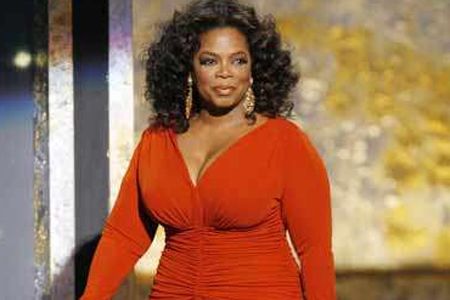
So I find myself subconsciously looking for theologians who will help me articulate the balance of recognizing that capitalistic consumerism is no more my savior than is a complete Amish rejection. Enter Kathryn Lofton and her work Oprah: The Gospel of an Icon. This interview is dated now, but the end of it points to something I value: Lofton's desires to explore how the American Dream is possibly corrupt. Duh, I mean, Yes! And yet we continue subscribing to the money mongering game of capitalism hoping (amidst our disdain for the rich) that the next time we play we will be the lucky ones who get rich quick.

Anyway, Lofton begins that for Oprah there is a symphonic way that consumption and religion are not in opposition to one another but in collaboration. She notes that in the past, American religious scholars have sought to untangle these ideas revealing their own ideas of what's sacred vs. profane. She gives us three principles for religion and culture:

1) religion in pop-culture. The crucifix in a pop music video.
2) pop culture in religion. The use of blogs by believers.
3) pop culture as religion. Fandom.

This is why Madonna was so offensive in the '80's (religion in pop culture) and mega-church malls were so annoying in the '90's (pop culture in religion), Lofton expains. The former is profane, the latter, crass commercialization of the sacred.

Like a Virgin
Willow Creek: my favorite megachurch


This is the part I underlined: If only we didn't imagine culture and religion as neatly divided, we may be less surprised by their ceaseless commingling. There have, as it turns out, always been pigeon sellers, in every temple.


Icon B
Icon A


I don't think the pigeon sellers in the temple bit is a copout. I constantly hear conservatives misquoting John's Jesus, "the poor will always be among you," in an effort to ignore the poor's plight—certainly not Lofton's point. This pigeon reference is not about ignoring the capitalistic ventures to continue engaging in consumeristic behaviors under the guise of generous gift-giving (ala Oprah), but instead, a finger pointing to the reality that the lines between American religion (especially Protestantism) and (pop)cultural memes are blurry at best. (If Niebuhr could have admitted this a half-century ago would contemporary Christians embrace culture differently today?)

And yet, neither does this merger, or blurring, or commingled reality of culture and religion (or whatever you want to label it) excuse those of us who seek value and meaning outside of American consumer culture, those of us who seek fandom in areas outside of pop culture but who also do not forbid pop culture (point #3, culture as religion). As a thirty-something, white, American, female, who rejects the promises of the American dream and who upholds the promise of the Beatitudes, how do I situate myself (and my parenting for that matter) in a way that neither over-values the accumulation of shit (i.e. material goods that pass away) nor under-values the call to be other-worldly, placing one's hope and esteem in a transcendent reality that stretches beyond the cosmos (figuratively speaking of course)? How do I do this?

Is it enough to reject Oprah's and TD Jakes' prosperity gospel?
Is it enough that I still use the first generation iPad (even though I also have an iPod, iPhone, Macbook Pro, and an old cracked-LCD Macbook)?
Is it enough when planning worship or imagining a new liturgical ritual that might appeal to the millennial generation that it embraces social justice concerns like not using an American mega-bank for our checking and savings accounts?

Don't answer. In my questioning I want to embrace the ambiguity. And realize further that the non-ubiquitous characteristics that I named at the start (the other core tenants of anabaptist belief) certainly supplement my efforts, or the efforts of the faith community, to live in culture, embrace culture, and push against culture when it needs redirecting. Right? Oprah's product is a practice, and her practice is her product. This is simplistic, bad theology. I will not be self-transformed by Oprah's or America's or Dr. Phil's or Nate Berkus' or Suzie Orman's product, but by the renewing of my mind (when I'm wearing my new dress from Anthropologie--kidding).

There will be more from me on this...I'm only through the first three chapters of Lofton and Oprah.

8.18.2008

Book Report 2, Part B

Part VI.
I found this to be the most interesting part of the book. With the in depth look at Martha Stewart, Paris Hilton, and Ellen Degeneres, as well as a few other celebrities (K-Fed, Britney, Jessica Simpson, and Vanilla Ice), this section aimed to describe and define the parameters of the anti-fan. Jenkins offers the idea, in relation to Martha Stewart fandom that one becomes a fan not necessarily by the shows they watch on television, but by translating that viewing into a "cultural activity, by sharing feelings and thoughts about the program content with friends, by joining a community..." (305). This seems to be true based on personal experience. However, this also seems to be an adequate definition for the anti-fan as well. Does not the critic of Martha Stewart also frequently watch her show, in community, in order to criticize and further define their rejection of her? So it is with Paris Hilton and other celebrity groupies as well. Like the Martha Stewart article notes in the close, Stewart's time in jail and "punishment made Stewart a more likable figure" (314). It seems that the masses hover over a good scandal, perhaps in an effort to ignore the stress and normalcy of their own existence. At least, this was part of the argument for Paris Hilton, and her ability to build a Hollywood business on little to no talent. So much so, that her boyfriend wrecks her Bentley while drunk one weekday night after leaving a Hollywood nightclub drunk. And the media is crazed to present this story as much as additional information about Hurricane Katrina victims and ongoing actions of the Iraq War, also two relevant cultural events (328). Consider the following:

Americans take inequalities of birth, wealth, and opportunity in stride; but in a cultural economy where fame is inexorably replacing talent as the coin of the realm, a nagging residual Protestant work ethic still expects fame to be earned...Most Americans have learned to tolerate trust-fund kids as an annoying side effect of capitalism, but when the insanely overprivileged refuse to enjoy their wealth and leisure in private, demanding instead that we must bear public witness to their privileges as 'talent' or 'allure,' they transgress a much more powerful moral boundary, one that has allowed the fabulous and the drably normal to survive in nervous harmony (329-330).

Perhaps this is indirectly my preferred definition of the anti-fan. I reject Paris Hilton and all that she stands for her in lavishness and arrogance. However, like anyone else checking out at the grocery, I glance at the tabloids wondering what she's up to now. Then when I push my cart of baby formula, milk, and eggs to my car (all necessities with little money for fluff) and I am feeling drab about my unstylish outfit, broken flipflops, and flat hair, I cannot help but consider Paris again in all of her glamour and excess. Surely, America's obsession with her, as she is a symbol of all the privileged elite, is not so much about her lifestyle, which I would argue is lonely, empty, and inauthentic, but more about a longing for what we think will make us happy. So then as I load my groceries into the car, more than any prior feelings reminding me of my lack of glamour, instead I am indignant at her insincere idiocy, my temptation to read the stories about her, and Americans as a result spending more money they do not have to emulate her look of perfection in a personal quest for greater significance. What is more, as I pull into my driveway, unstrap my kids from their carseats, and navigate my way into the house, I move into a mood of grief. Thinking about the Katrina victims, the families who are losing their children in the war, and all of the Americans in insurmountable debt, I hurt for Paris Hilton and the creature she feels she must continue to be in order to be loved (albeit not very fully). Surely, God loves Paris as well. So then my anti-fan status migrates into a deep appreciation for all that Paris could be to the world with her privilege and unlimited resources if someone would only take the time to authentically care for her and show her how to do good. In this way, my anti-fandom transforms into empathetic fandom in a give-and-take tango, as I dance my way through such complex thoughts and emotions; yes, even at the grocery.

Afterward.
If I am my own "media outlet," which Jenkins defends (358), and I adopt, then as a participating consumer in American culture, (a.k.a. "prosumers" (360)) the role that I will play in future media events will grow in significance. Jenkins considers the slew of media participatory venues available on the world wide web that enable prosumers to create, design, and implement their own identity and way of participating in the world--Flickr, youtube, del.i.cious and Ebay, just to name a few (357). These virtual communities, many of which I participate in, means that "this kind of fandom is everywhere and all the time, a central part of the everyday lives of consumers operating within a networked society" (361). So that, asserts Jenkins, the new ideal for the American consumer is a fan, someone who shares a product with her community and promotes new ideas in said community (361). In this way, I recognize my contributions to a culture of fandom. I love one of the questions with which the book closes: "Where does grassroots culture end and commercial culture begin" (364)? Since this ambiguity is so immense, I hope to embrace the lines between reform and conformity as I continue to negotiate how to best live out my Christian convictions in a media-hyped, celebrity-obsessed, competition-driven society.

8.14.2008

Book Report 2, Part A

So, my second book report, one of the required readings for the class, follows. Since this text is so detailed, rather than discuss each individual essay, I intend to address each of the five segments in the collective work. (Hope that's okay.)

This conglomeration of essays discuss what it means to be a fan today. As the introduction states clearly, where as in the past decade or two, fandom was labeled as the 'Other' in our society as a result of their oddities and disempowerment (1, 3), today, fans are the target groups of marketers and business entrepreneurs, such is the beauty of capitalism. What was once labeled weird and "introverted" (4) is in the contemporary society cool and "extroverted" (4), assuming you can make money off of it. The book uses the illustration of Trekkies and their subculture as the eccentric fans, with Potterheads (followers of Harry Potter) as current fans who are hip and mainstream. In addition to our economy paving the way for this change, so too, the authors describe our media presentations, the ways that they have shifted, and subsequently how they have shaped our response to fan cultures, and how we see ourselves participating in them now, rather than rejecting or stereotyping them. It is after all now, cool, right? What is more, celebrities give all of us permission to associate with the socially proper object of our obsessions. Boy am I glad that I obsess over Grey's Anatomy and Sex in the City reruns instead of other more juvenile options like Miley Cyrus or nerdier shows like my brother wants to marry, Northern Exposure. (I guess I have a thing for watching dysfunctional relationships unfold.) The idea that blackberries, ipods, laptops, tv's, cell phones, and even the internet sites we browse (8) all empower us to better identify with our subculture obsession du jour, barely earmarks the significance of this cultural shift from fans-are-geeks mode to a fans-are-everyone-including-me mentality.

Part I.
This first section is weighty with its sociological jargon and defensive projections about the study of fandom as it relates to larger fields of study in the (American) academy. However, I appreciate the comments that deal more specifically with how media and cultural studies may benefit from more honesty, especially by academicians (who pride themselves on being neutral in their value judgments) admitting that we are all inevitably affected by aesthetic judgments (44). If this were the case, Hills labels this less "reflexive" approach to aesthetic judgments as "hermeneutic constructions of self-identity, and a recognition of how these may be both ideological and opposed to specific ideologies" (45). In a similar vein, the subsequent article about cyber Beatles fans states in its conclusion that "ideology plays no role in the negotiation of meaning surrounding a neutrosemic cultural object" (58). Scodari goes on to assert that in her study of Yoko Ono's influence on the break-up of the Beatles, it would be beneficial to follow-up her fandom studies with an analysis of the trajectories the fans followed as they jumped from one fan culture to another in search of their "ideological" and "subjective" icons (59). It seems then, that in this way, as we are all fans seeking an aesthetically pleasing ideal in which to place our loyalty, we do well to remember that whatever whoever it is that we situate are affections in, the likelihood that it is our full ideal, worthy of our allegiance, is a false platitude.


Part II.
The initial article in this second portion of the book intrigued me quite a bit. The idea that people watch ongoing news television and internet channels for different reasons, other than to acquire information about their world has always peaked my curiosity. In his work, Gray offers three reasons why people watch the news: 1) emotional appeal (77), 2) larger community (81), and 3) to be skeptical of the emotional appeal. In regards to political shows and heavily biases news channels, like Fox News, people can present a candid portrayal of complex events with a desire to promote an emotive uprising among the recipients of the message. Then those recipients are able to turn to their virtual online communities of chatrooms, blogs, and op-ed pieces in order to conglomerate further about their likes and dislikes of the particular news program. Likewise, the skeptics of this emotional appeal to our news presentations are forces to realize that "absolutely rationality would leave no room for caring, for personal or communal drive, nor for belief, engagement, or enjoyment, all of which are basic requirements for an active electorate" (86). In this way, this article inspired me to watch an evening news program (Katie Couric), which I usually find to be boring, in an effort to compare it with more relevant and entertaining and satirical news shows like The Daily Show. Both of them are emotional and have a community of followers, and therefore, both offer the average American ways to better participate in their culture through voting elections, philanthropic responses to tragedy, etc.


Part III.
Part three investigates the success stories of different fancultures by discussing how these lucrative and well-known icons have created adequate space for their devotees to gather and follow. Couldry's essay takes the reader onto the set of the popular HBO series, The Sopranos. Many of the scenes in which the show was filmed were on the streets of New York City and sparked an increase in tourism to those sites (141). The author himself confesses to preparing special meals from The Sopranos Cookbook when hosting a small group of like-minded fans to dinner before the airing of the next episode. The author questions, "How would my 'internal' account of my visit fit, if at all, with any 'external' sociological interpretation (let alone deconstruction) I might imagine myself making of the same experience" (141)? He goes on at this point to discuss the venues that media creates on a larger scale. We feel "near" to a character, even though we are geographically distant or, especially if the character is fictional (142). It can then be disconcerting to realize that we are not in close association with the given character and disillusion us from the entire fandom experience. I feel like I experience this frequently when I am reading various blogs. Often I can complete a sentence of a blogger that I follow religiously, and pride myself on my ability to be so well-informed and orthodox in my interpretation of his statements. However, I have to be honest with myself and admit that I probably just as frequently misunderstand his points and theology by the mere fact that he lives o the other side of the country in a completely different context, not to mention that he is writing from a different gender perspective and is a different generational bracket. So, in this way, yes, I am a fan of this blog, but what is more, I do not fully know the author like I want to claim.

Part IV.
The global perspectives offered in the essays in this part of the book were enlightening and helped me to better understand why various film followings are so consumed with their subjects. Ideas like Indian-film, violence and East Asian film, Korean film, and issues like global fandom in general point to our fascination with broad ranging ideas. The ideas of nationalism (229), consumerism, and emotion that was part of the all the essays, reminded me that despite our geographic distance, the entire global community shares a fascination with "popular phenomenon" whether they are contemporary or archaic, optimistic or negative, communal or in isolation (230). We are fall fans, joined together by common interest.

Part V.
Speaking to the marginalization of females in sports fandom, to the rise of technology in music fan communities, the fifth chapter to this book highlights the sweeping changes in the history of fandom. I was drawn to the article about female sports the most since, I too, am a woman seeking a vocational experience in a male-dominated field, i.e. church leadership. Gosling, the author begins by saying that sport, for men and women, plays a defining role in its ability to help shape our identity in so far as it encourages us to articulate where we originate and where we hope to go (251). This is why it is so problematic that "many sports and sport venues are the site of overt sexism and aggressive masculine behavior" (253). Is this not also mirrored in the church?

Women's marginal position within sport fan cultures means that their legitimacy as sport fans is often questions, even though there is some evidence to suggest that women may be more dedicated and loyal to the sports they follow. This questioning of authenticity and loyalty could simply be seen as an expression of men's fears over women invading their traditionally masculine space; however, it plays an important role in marginalizing female fans (260).

This quote underlines for me that ongoing gender issues in our culture. Sometimes I feel like since the feminist movement has more or less come and gone (via Gloria Steinam, Naomi Wolffe, and other great authors), unsuspecting people think that women now have equal opportunities and rights. I would argue contrary to this. The glass ceiling effect in the business place, the sports arena (as seen here), and in the political climate of our country still exists, not to mention the religious one as well. And while I feel called to the pastorate, I do not feel led to vocally berate churches and denominational organizations for their continued sexism and the ways in which they perpetuate sexism throughout America. On the other hand, I do feel called to rise up against this. I am not sure at this point what the means or how that practically plays out. In other words, I am not a fan of male domination. On the other hand, I am a fan of speaking truth, living functionally, and going against the flow of the staus quo when the timing is right.