Showing posts with label preaching. Show all posts

2.16.2014

Welcome to the Gray

Jesus continues his lesson to the disciples in this sermon on the mount. We first encountered the Beatitudes, the blessings of God. Then last week discussed how Jesus’ viewed himself as a fulfillment of the Jewish Law Code, Torah. Today we see a new rhetorical tactic. Jesus quotes the Judaic Law, then he offers a new interpretation. “You have heard it said that way...but I say to you this...” Let us hear now what Jesus has to say.

Matthew 5:21-37

"You have heard that it was said to those of ancient times, 'You shall not murder'; and 'whoever murders shall be liable to judgment.' But I say to you that if you are angry with a brother or sister, you will be liable to judgment; and if you insult a brother or sister, you will be liable to the council; and if you say, 'You fool,' you will be liable to the hell of fire.

So when you are offering your gift at the altar, if you remember that your brother or sister has something against you, leave your gift there before the altar and go; first be reconciled to your brother or sister, and then come and offer your gift. Come to terms quickly with your accuser while you are on the way to court with him, or your accuser may hand you over to the judge, and the judge to the guard, and you will be thrown into prison. Truly I tell you, you will never get out until you have paid the last penny.

"You have heard that it was said, 'You shall not commit adultery.' But I say to you that everyone who looks at a woman with lust has already committed adultery with her in his heart. If your right eye causes you to sin, tear it out and throw it away; it is better for you to lose one of your members than for your whole body to be thrown into hell. And if your right hand causes you to sin, cut it off and throw it away; it is better for you to lose one of your members than for your whole body to go into hell.

"It was also said, 'Whoever divorces his wife, let him give her a certificate of divorce.' But I say to you that anyone who divorces his wife, except on the ground of unchastity, causes her to commit adultery; and whoever marries a divorced woman commits adultery. 

"Again, you have heard that it was said to those of ancient times, 'You shall not swear falsely, but carry out the vows you have made to the Holy One.' But I say to you, Do not swear at all, either by heaven, for it is the throne of God, or by the earth, for it is his footstool, or by Jerusalem, for it is the city of the great Ruler. And do not swear by your head, for you cannot make one hair white or black. Let your word be 'Yes, Yes' or 'No, No'; anything more than this comes from the evil one.

Teach us to choose blessing
and life rather than death, O God,
so that we may walk blamelessly,
seeking you
through reconciliation with all of your children. Amen.
___________________________
Men, how many of you have had your wife ask while looking in the mirror, “Does this dress make me look fat?” By the sound of the laughter I suspect that most of you have enough wisdom to answer regardless of what you really think, “Of course not, Honey! I don’t know what you’re talking about! You’re gorgeous.” Women, how many of us have asked our husbands questions with impossible answers? 
Or how about this one, your grandchild offers you a self portrait that looks more like someone threw-up finger paint. How do you respond? “Wow! What a fabulous artist you are. Thank you so much.”
So what about these little white lies? Are they wrong? One of the Ten Commandments is, “Thou shall not lie.” Yet all of us are guilty of this simple excursion away from God’s code of ethics. Is this wrong?
When Moses descended from Mt. Sinai with the Ten Commandments, he carried on the tablets general dictates about behavior. Keeping Sabbath, Preserving Life, and Honoring God formed the crux of these new rules.
The Israelites were just freed from slavery under the Egyptian Pharaoh, and they needed practical guidance during their desert wanderings to the Promise Land. This law code was offered in a particular context for a specific people group. 
Fast forward a few hundred years and we arrive at our Gospel Lesson today. Jesus continues his Sermon on the Mount, having just told his disciples that he is the fulfillment of the Law—not the end of it. Naturally, he begins to reinterpret the well-known commandments, explaining this idea of fulfillment.So he touches on a few hot topics: murder, sex, divorce, and swearing/taking oaths. 
You have heard it said, “Thou shall not murder. But I say to you, why would you ever allow your anger to get to that point in the first place?” How can sacrifices in the temple be authentic, if they are offered with hard hearts? How could the ancient Israelites testify to God’s goodness when their inner conflict trumps that of Rome’s? Jesus is drawing a familiar but antiquated law into his first-century context. Instead of the law generally stating “do not murder.” Jesus moves into the crux of the matter. Deal with your anger. Do not let arguments and grudges fester. Ask for and offer forgiveness. Then murder won’t be an issue.
Then he tackles adultery, lust and divorce. “You have heard it said, ‘Thou shall not commit adultery.’ But I say to you, betrayal is more than sex and secrets.” Again, we see him turning to something that every Jew on the hillside that day would have understood. It was not about jabbing out one’s eye or literally cutting off a hand because we might sin with it. Instead, Jesus redefines what it means to lust or express infidelity. Jesus radically brings concern of women into this conversation. We tend to lose this in our own contemporary context where women are clearly apart of the adultery and lust conversation. Further, “You’ve heard it said ‘“Whoever divorces his wife let him give her a certificate, but I say, don’t divorce unless there is infidelity.” In the first century men could divorce their wives without cause or reason. They received a certificate so that they were not wrongly murdered for adultery, but they lived the rest of their lives without care. Jesus was saying, “Stop leaving women by the roadside when they no longer suit your needs.” He did not want men to cast aside their “property” of wives without regard with their well-being.
So often the Jewish people in the New Testament get a bad reputation in light of situations like this. We tend to view their religion as rigid and uncompromising, as if it was a black-and-white approach to otherwise complex life scenarios. A harsh mix of dogmatic rules and inconvenient lifestyle practices. But I think we miss a really important part of Jesus with this mindset. On the contrary, Jesus’ fulfillment of the Law brings it back to life for his followers. Jesus keeps it relevant. He considers the cultural setting of his followers, and he helps them make sense of something ancient. In other words, Jesus reminds the disciples that the Law is about life. Torah was given to the Israelites for protection and connection with a life-giving God. 
Through the fulfillment of Jesus, the Jewish people were reminded of this truth. The Ten commandments are not meant to answer every question we have today in twenty-first century America. If we turn with legality to a law code that was composed for a specific people group thousands of years ago, we get into trouble with major misunderstandings. The same is true even if we rely on Jesus’ new interpretation in the first-century. 
You have heard it said, “Thou shall not lie.” But I say to you, “Men, choose life! Tell your wife that indeed, she is thin and beautiful. Grandparents give life to your grandkids! Praising those abstract portraits. Choose life! Choose it for yourself and your marriage and your family.” 
When Jesus shows us how he fulfills the law, he gives us permission to understand the work of God in our cultural and timeframe. So, it is not about Jesus teaching things that are wrong, nor does it mean we have to understand Jesus literally. Jesus welcomes us to the gray areas of life, and says, “Even here, you can experience abundant life under the reign of God.” Jesus gives us room to discover liberation in the limbo of everyday.
So as we get caught in situations where these is no clear right or wrong, consider what is best for preserving relationship with the people we serve and love. Instead of approaching conflict with uncompromising certainty, is it not gentler and more productive to consider the deeper causes of the conflict? We must ask, “What gives life?” If there is no guidebook for how to navigate a certain scenario we might ask of our options, “What gives life?” 
Let’s consider two situations in our culture today. Divorce is quite common. 50% of all marriages end in divorce, right? Does this mean that we are outside of the covenant of God’s law? Well, if we take Jesus literally, it does. But we are rejecting that interpretation, remember? Otherwise we would all be without our eye and hand and on our way to a burning hell for calling a friend foolish. However, if we follow Jesus’ example, we can discuss divorce with a modern perspective. 
We have under our belts the nineteenth amendment, the women’s liberation movement of the 1970’s, and continued breaks in the corporate glass ceiling. Women no longer need protection as a divorced person because they are no longer a piece of their husband’s property. Though divorce still has a negative connotation, it does not need to. Of course it is devastating and heartbreaking when relationships fail. And there are ongoing negative impacts of broken marriages that children must unfairly endure. On the other hand, when an abusive marriage further destroys the spouses, or when children are caught in ongoing verbal cross-fire between their parents the family does well to ask, “What gives life?” And if there is more abundance outside of the marriage, then perhaps divorce is the best option. Not the perfect one, but the most life-giving in that particular place at that particular time. Do you see how Jesus sets us free to respond to life in ways that enhance it rather than bind it up with rules? 
Where else do we need to confess that life is not a black-and-white representation of good or bad, right or wrong? In what areas of gray, can we experience growth and choose life while still serving the law of God? How about church? There is no right or wrong way to do and be church. How we act as church on Taylor Blvd. in South Louisville can and should be quite different than how surfing wine drinkers in Northern California might experience church. If Jesus were sitting here with us today, how might he expand the Ten Commandments even further to empower our church to choose life. How can Lynnhurst church offer life to her community? How do we express our faithfulness as a contemporary church? There are lots of ways...but perhaps that is another sermon for another time. I invite you to think on this more. 

Ultimately, we have a choice. Just as the Deuteronomy Lesson we heard today also indicates. We can choose life or death. We can choose to cling tightly to an ancient law code–either Moses’ or Jesus’ —that ultimately will result in death for us contemporary followers. Or we can choose life. We can find ways to imagine God’s law in the context of our community. We can continue enlarging the reign and love of God for all people. It might get murky at times, and it does not erase the pain or trauma of no clear solution. But in the end, the Law and love of God always gives life. Lynnhurst, let us together choose life! 

4.10.2010

Eulogies and Homilies

When I first realized that I seemed created to work in the church on a vocational path I did not trust that I liked, erh, loved people enough to really be any sort of meaningful pastor. But with my comfort in front of a large group could I not just hide my apathy for the congregants and their struggles behind the pulpit of a fantastic preaching career? Hmmmm... Then I tried preaching a few times in college and realized that it was a bit more challenging that I originally anticipated and consequently decided that I hated writing sermons. (It's an arduous task that still leaves me anguished.)

It never caused an sort of existential crisis, I still knew I would work in the church, but as I matured and realized all that ministry entailed, I also sobered a tad and confessed that I had no idea what sort of ministry I imagined. For the two years that I lived in CT and took classes at Yale, I grew into a fairly avid follower of the emerging church scene. Perusing blogs, purchasing books by B. McLaren, D. Paggit, P. Ward, T. Jones, C. Seay, R. Bolger, E. Gibbs, and others, and dreaming about contemporary venues in which to house sacred spaces that celebrate the arts and capture the intellectual, liturgy-bound folks as well became time consuming and inspiring projects. Still, I was unsure how my impatience for people's issues fit into all of that.

Then came my first pastoral theology class, my first quarter as an official seminarian. I was skeptical of the Presbyterian professor. (Who really believes all of that reformed shit anyway? And this was before I officially joined an Anabaptist community. ha.) Never will I forget sitting there, notebook open, and it wasn't a Mac, but a real spiral bound Five Start beauty, pen at attention, and the excitement that comes with the certainty that you are just where God wants you for a given moment. As we navigated our way through the curriculum I felt a greater and stronger pull from some Other transcendental force, urging me out from behind my metaphorical pulpit, aka my hiding space, and into the messy, detailed lives of parishioners. How else does one know what to preach if they are not adequately immersed into the daily happenings of their flock?

But the unit that really cinched up the knot of pastoral care for me was funerals. The opportunity to meet people in moments of crisis, especially the ones that are unexpected like when the community teenager is killed in the car wreck, when words only feel trite and inadequate, and when pain is too palpable and severe, when the shock reverberates still, and when questions of faith and spiritually are pushed to extreme limits means an opportunity to bring the presence of the divine into places of isolation, loneliness, despair, and fragmented marginalization--the places God loves most to be with people. The opportunity to bring comfort, hope, or love or not, but instead simply and silently to sit and represent the permission to still dream despite the heartache inspired me. What a humbling and surprising gift. The expectation and anticipation of one day getting to offer that gift to parishioners often led me to tears in class. Yes, I cried in class. Quite a bit depending on the class actually (or in what stage of my pregnancy I currently existed). Next came the art of crafting a good eulogy. How best do you celebrate a life, honor the deceased, and offer hope to those who are grieving? What a commission. One that makes me jealous when I see other people doing it well and angry when such times for care are abused or neglected. Maybe I do love people enough to be their pastor--not just their preacher.

Fast forward three years, Jude is new, and Livia is not yet two. After taking a one quarter hiatus from school to acclimate to my knew set of circumstances and life pace, I soon realized that I missed the world of academia too much to stay away for long. So, a few months into mothering two, wife-ing one and figuring out when there was time or room for reading and paper writing, I started to wonder what it was I was actually doing. Is this degree really necessary? Is the M.Div necessary? Can I not just love my friends and family enough on interpersonal levels through situational relationships? Do I really need to pastor? The pace was hard. Let's be honest, I was exhausted.

Then came two dear friends with the invitation to perform one of two homilies at their wedding. The memories of my pastoral care class inundated my honored mind. OF COURSE I will help officiate at your wedding! OF COURSE this will fill me up beyond overflowing. (Who says the wedding is about the bride and groom?) This outdoor ceremony in latent May arrived at a personally critical juncture. To marry or not? As the pre-ceremony butterflies fluttered around in my post-natal, fatigued gut, and as I later stood before the bride and groom offering to them words of encouragement, mutual enjoyment, and hope for a married life well lived under the cornerstone of Christ, I could not help but think by the time the reception rolled around, that again, Yes! This is why I am here. To bless people in the name of a loving God on one of the most meaningful and significant days of their lives. Truly, this too, is a gift beyond measure.

So then, herein lies my new confession (I think this is a tangent regarding my original purpose in this post) as I experience more closely the theological dilemma and blinding pain of lost love (not in my own marriage, however): is the presentation of Mr. Tyler and Mrs. Lauren Mayfield (hypothetically speaking) a ridiculous announcement doomed to failure? Marriage between the greatest of two lovers is not a guarantee, no matter how much we claim that divorce is not an option. We freakin' live in a world of prenuptial agreements!!! And yet, death is certain. Death is not to be avoided. The allure of marital bliss ebbs and flows, while the certainty of death remains constant.

I'm not sure if I believe in marriage anymore. This concerns me. I used to be so excited to continue in the tradition of marrying dear friends and parishioners alike. But it feels disloyal to do so at this point when I am no longer sure of the legitimacy of the covenant.

Perhaps what I am trying to say is this:
That the opportunity to perform my friends' wedding reminded me of why I wanted to pastor and minister in the first place--to serve people in times of need, be they positive or negative. Again, what a gift to stand at the alter with them as a way of blessing and sharing such holy and intimate moments.

However, life's moments of celebration and joy used to thrill me beyond measure and leave me with an excitement to be felt for days. And when I realized that it was so exciting to be the minister in such instances because I really do love people enough to share such intimate moments with them, I never dreamed that it could get any better.

But now, in general, joyous moments make me feel cautious, trepidatious, and even a bit foolish for hoping in their continued joy. I'm thinking of births, dedications, baptisms, homecomings, weddings, etc. This bums me out and does make me wonder if I write tonight from my own depression rather than joy.

Whereas, the darker moments of life, those crises that are inevitable but unexpected, the experiences that shake us to our core and force us to question our very existence are where I long to minister. Is that dark and morbid?

Maybe.
Maybe not.

Right now it feels incredibly real and honest. It is what is secure and what I know.

I find it easier to bless a prematurely birthed baby resting in the NICU and her tender-hearted parents who struggle to process the ordeal and minutia of medical details in the road ahead of them, than I do the vibrant, healthy, breast-feeding newbie who knows no struggle until later times. (Not that I'm not rejoicing over a healthy birth, don't misread me.) Because the fact of the matter is, we are all going to mess up our kids. We are all going to need a good therapist. And those of us in the trials of life are usually more perceptive to and ready to acknowledge this truth than those of us who move through life migrating from one celebration to the next.

Is this my cynicism or my authentic and growing love for the realities of life and the people who are forced to experience them?

Despite my questions, I can claim that I long to pastor in such ways that enable people to confess the traumas of life while still giving themselves permission to hope for joy and something more fulfilling. And this is only because I long for them to know that they are loved by a Creator and Caring God who promises time and again to never leave for forsake...when we feel happy, but even more so in extreme seasons of depression and oppression. Even more now I realize just how much I love God's people. We all hurt. We all need pastors. We all need to be reminded that God loves us. Amen? Amen.

4.28.2009

A Buzz Word about God

Since I am graduating in seven weeks, yes, seven weeks (!!) I have been entertaining off-and-on a resurgence of life questions. What is my denomination? Do I believe in denominations? Why am I not already on a path to ordination? Should I not have an ordination service following the week of the commencement festivities? Where will I pastor? In what context? Shouldn’t God have already worked all this out?! I am twenty-eight, after all!?

Birthing two kids in the middle of my degree has offered me a bit of permission from God (myself, really) to let up on the how’s, why’s, and when’s in place of some more favorable peace. Surprisingly, as life grew busier, the peace became more present. When all of the above questions were hovering around like a poisonous bee at the start of my seminary tenure I thought I was going deaf from the numbing ZZZZZZzzzzzzzzz of where is this education leading? The loud buzzing never really went away, but as life progressed, it did drop down to a low dull so that I could proceed through life. Now that damn bee is back and the buzzing can be heard at decibels so electrifying I wonder when our nosy neighbor is going to call the cops for noises in our apartment louder than city ordinances permit. (Maybe I just have mental illness.)

Anyway, I have initiated several conversations with various people in the ministry and my family with the hopes that their guidance will numb the sound. They are people whom I trust and consider wise on such subjects like what the hell is God doing with my life. Their opinions have slightly varied and their ideas of what would be best for me are even sundry, yet one element of the dialogue has remained consistent amidst all my questions and anxiety (again, mostly self-imposed).

God loves you.

Hurumph. I usually huff a little and slightly audible sigh, feeling perplexed wanting more clarity about the here-and-now and not really wanting to continue such an esoteric line of thought. Then I think, actually God’s love is extremely tangible. That’s when my shoulders relax a smidgen. My breath comes a bit deeper on the next inhale, and I reluctantly remember this profound reality. Yes, God loves God’s people.

God did not bring me this far in life, with a husband, two kids, an (almost) advanced degree, various life experiences across the country, etc. to suddenly say, “ummm…yeah, good job on the grades at seminary, Lauren. You’ve arrived. You are now a Master of the Divine. So….yeah, good luck with all that. See you in a few years at the next resurrection.”

Sometimes I tend to think that’s the case, given what I’ve learned and misunderstood about process theology and practical theology and everything in-between that discusses how God may or may not interact in the world. However, everything inside me screeches (or wants to stand) against that.

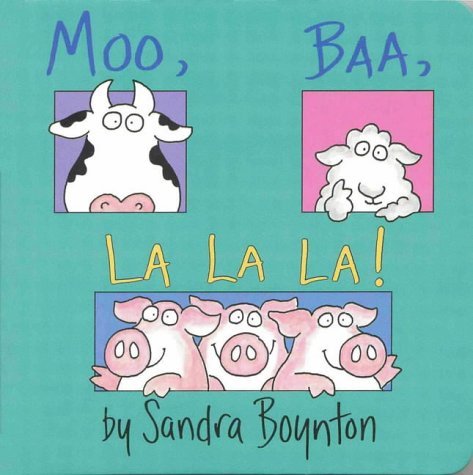
Liv loves the book “Moo, Baa, La La La” by Sandra Boynton. (A great children’s poet!)
It goes:

A cow says, “Moo!”
A sheep says, “Baa!”
Three Singing pigs say, “La! La! La!”
“No, no,” you say. “That isn’t right.”
The pig says, “Oink!” all day and night.

Rhinoceroses snort and snuff
Three little dogs go, “ruff, ruff, ruff.”
“Quack,” says the duck and a horse says, “neigh.”
It’s quiet now.
What do you say?

No! No! I say to God, “This isn’t right!” you love us still, to our delight.
(Sorry, I suck are rhyming.) Which is code for, God’s not going to forget about us (i.e. me). Or anyone for that matter, even if you are marginalized and deprived of certain human rights. (Do I even have the right to say that? That’s a whole ‘nother post for a later time. We’ll see if I still believe that after a trip to Cape Town later this year.) even if you are in the midst of foggy transition that rates low on the frontal visibility scale.

So yes, my life seems to be transitioning, the bee is buzzing, and yet “it’s quiet now.” What do I say? The opportunities are many and the possibilities somewhat limitless. What a tremendous, inexplicable, unmitigated gift! Truly. Who am I to query about it being otherwise simply because it’s a bit vague and full of ubiquitous ambiguity right now?

It’s quiet now. What do I say?

Well, I’m a bit too overwhelmed really to say much at all. I speculate that my husband is as well since he’s on a parallel existential track of life-purpose. Good timing we’ve got, eh? At least one of us in the marriage could be a stabilizing force. Oh well. ☺

Instead, I think I will permit the golden Barbara Brown Taylor to once again, use her magical powers of clear and metaphorically enhanced articulation to speak for me.

In response to Terry Gross’ inquisition about her underlying assumptions of the word/image of “God,” as she perceives and believes it to exist, Taylor inspires me with this.

“When I say the word, “God,” I am so aware that I’m using a code word…I suppose my own image, my own idea of God as imperfect and evolving as it is, right now, would be the glue that hooks everything together. The consciousness that moves between all living things…I do not envision a large person…I envision instead some (a slight pause) presence so beyond my being. A presence that both knows the stars by name and knows me by name as well. That is not here to be useful to me, that is not here to give me things as much as to ask me to give myself away for love …but when I say I believe in God, I trust. I trust in the goodness of life, of being. I trust that beyond all reason. I trust that with my life.”

To give myself away for that love…That love which is God’s-self. So then I think, duh. I can do that. What’s so hard about that? And then I’m awake all night wondering about that. Geesh (wink, wink).


(I wrote this on my flight to DC. Expect a follow-up soon, post-trip.)

3.09.2009

Prophetic Words

Tomorrow is our church staff meeting, and I have to lead a discussion on prophetic preahing. Each time we meet we close with a ten minute ditty or so on a different topic for our own edification and learning. I'm going to share about when I was in James Forbes' preaching class at Yale. At the time, we was still the pastor of Riverside Church. To say that the class was wholly transformative is still an understatement. My text for the class was James 4:4-10 and the assignment was to preach a text that would usher in the next American Great (Religious) Awakening. Forbes gave us a masterful sample sermon one class session in which he relied on Ezekiel redressing the skeletons of dry bones way down in the valley to describe what it will be like when we awaken from our religious slumber here in America. It was five years ago now, and I still remember his command of the room like it was yesterday. I still feel the pulse of his energy--fabulous!

This has me thinking about lots of things. First, I don't think that we are necessarily in need of a huge revival as they were led by George Whitefield, Charles Finney, and Jonathan Edwards back in the day. And not that that was what Forbes was advising, but there still seemed to be somewhat of an "us vs. them" mentality in the class. Us Christians, us social do-good-ers, us seminarians vs. you ???? losers who need religious help ???. Anyway, I approached my sermon text with this framework and automatically set myself for some intense criticism without even realizing. "Friendship with the world is enmity with God." --that's part of the James pericope. ha. Well, I took it and ran with it...ran it right into the gound rather than into the hearts of all my listeners.

Granted some of my classmates were a bit snobby--we were at Yale after all, and a few of them were just so dang liberal they didn't even know what hit them (or the books of the NT in order for that matter-the horror!), while the others just obligingly sat there as I embaressed myself for a full 15 minutes thinking I was going to be the best damn prophet they'd ever witnessed (aside from our professor of course!).

One guy on the class response sheet handed it in blank except for a brief fragment at the bottom reading, "I don't believe in anything you said." WOW! How's that for sharing the love of Christ through some peer-to-peer constructive criticism?! I can honestly laugh at it in my reflections now, but at the time, I was pissed beyond words. Not hurt or intimidated, just stark raving mad. Who did he think he was---plus he sucked at his delivary. But lest I needlessly get lost on that tangent, I'll get back to my point-I do have one here. The class had been shocked that I would make such bold claims as I did in that sermon. And to be honest, when I reread it now I am a bit surprised by my doctrinal confidence as well; I'm no where near that person today. Yet, on the other hand I still find the sermon inspiring on a certain level.

Yet, leave it to the master. After I finished preaching, Dr. Forbes had me reread the scripture passage for the class. Instead of approaching it with a vengeful or dramatic disdain, he had me read it with remorse and longing. You could have heard a pin drop when I finished reading it the second time. Ahh....it was more safe for them to listen at that point. I started to get it. On the other hand, as I near the end of my time in evangelical Fuller world, often a place where people are not bashful about dropping a judgment bomb or critique from God, I find myself more in the middle. I don't want to sugar coat harsh teachings from the Gospel to spare feelings, but I also don't want to alienate people needlessly. It's a very, very fine line.