1.21.2014

Preparing for Something New: A Name

This is the second Sunday of epiphany. Let’s remember the path we follow with our biblical story. First the wise men traveled from the East to see the small infant in his mother’s arms. Their lives were changed and they returned home on a new path. Last week John the Baptist met Jesus when he requested baptism. He was anointed for ministry when the dove of peace and justice descended from heaven. This week, we read John’s version of the baptism then Jesus attracts some followers. 

John 1:29-42
The next day he saw Jesus coming towards him and declared, ‘Here is the Lamb of God who takes away the sin of the world! This is he of whom I said, “After me comes a man who ranks ahead of me because he was before me.” I myself did not know him; but I came baptizing with water for this reason, that he might be revealed to Israel.’ And John testified, ‘I saw the Spirit descending from heaven like a dove, and it remained on him. I myself did not know him, but the one who sent me to baptize with water said to me, “He on whom you see the Spirit descend and remain is the one who baptizes with the Holy Spirit.” And I myself have seen and have testified that this is the Son of God.’*
The next day John again was standing with two of his disciples, and as he watched Jesus walk by, he exclaimed, ‘Look, here is the Lamb of God!’ The two disciples heard him say this, and they followed Jesus. When Jesus turned and saw them following, he said to them, ‘What are you looking for?’ They said to him, ‘Rabbi’ (which translated means Teacher), ‘where are you staying?’ He said to them, ‘Come and see.’ They came and saw where he was staying, and they remained with him that day. It was about four o’clock in the afternoon. One of the two who heard John speak and followed him was Andrew, Simon Peter’s brother. He first found his brother Simon and said to him, ‘We have found the Messiah’ (which is translated Anointed). He brought Simon to Jesus, who looked at him and said, ‘You are Simon son of John. You are to be called Cephas (which is translated Peter).
Bless the hearing of these words O God. That what is ordinary might transform in your presence to something extraordinary. Something that might just change our lives and inspire us to change the world. Amen.
_________________________________________
America met Rob Ford this past year. Do you remember Toronto’s headline-making mayor? He burst onto the public media scene, quickly becoming comedic obsession for the writers at SNL and the Daily Show as reports about his illegal behaviors while mayor mounted. Illicit engagements with women, then binging on mass amounts of alcohol, then drug use. Society watched as this man’s reputation fell to shambles. I wonder if our media-frenzied attention to this man’s downfall, like with other celebrities caught in public scandal, mimics the crowd’s fascination with battle and death at the ancient Roman Coliseum. But in the case of Ford, unlike a slain gladiator, Ford tried to make amends before the end of the year in the presence of the pastor and congregation at West Toronto Church of God. Standing at the front of the church, he resigned to stop smoking crack and consuming alcohol. In fact he named this confession for us. It was his “come to Jesus moment!” 
Well known atheist and satyr reporter Bill Mahr had this to say in response,
Jesus must admit that anytime anybody ever comes to him is after they’ve totally screwed up. [The audience laughs.] To save time, Jesus must change his message to, “Hi this is Jesus, if you were caught smoking crack press one, drunk driving, press two, sexual harassment three. For all those scandals please stay on the line.” 
Well, as you can imagine, the audience fell into uproarious laughter. And though it’s fairly irreverent, it is funny. Laughing is fine. But Mahr misses a crucial point. Arguably, he misses the point of the entire Gospel with this joke. We do not see anywhere in scripture Jesus redirecting an addict or a slut or a depressed person to voice mail, or whatever the ancient equivalent. In fact, Mahr had the first part of his joke absolutely right. We do all royally mess up, and when we realize our need for confession, we have our own come-to-Jesus-moments. Don’t we? We could easily remain here the rest of the day if we were all going to share our “Come to Jesus Moments.” Fortunately, the Gospel is so much than calling in to Jesus all of our misdemeanors. We come to Jesus for reasons in addition to our need for forgiveness. 
The wise men traveled from the Orient to see a king, and because their astrology signs were not aligned correctly due to the mysterious super-bright star in the West. John the Baptist was timid about his initial encounter with Jesus, not because of his sin, but due to feelings of unworthiness. He was humbled by Jesus’ request for baptism. In our story today, we see people already transfixed by this street walking, water dripping, preaching prophet who seemed to move about in the city wherever he pleased, saying whatever came to mind. Just one day after his baptism, according to John here, John the Baptist sees Jesus walking down the road and claims, “Look! Here is the Lamb of God!” And it was enough to spark an entirely new social movement, a revolution.
For the five years that I lived in Los Angeles, I never saw a celebrity. I can’t believe it. In fact, I’m convinced now that I probably did see at least one and just didn’t recognize them without all the glam. On the other hand, a friend of mine frequented a tucked-away and delicious Mexican eatery along the Pacific Coast Highway where he saw Minnie Driver, Martin Scorcese, Woody Allen and other A-listers pull in for a salty Margarita. My friend is too unassuming to point a finger as he yells out “Look! Paris Hilton!” “Look! Beyonce and Jay Z!” 
At which point every non-celebrity would turn to look. That’s what we do. We look! We look at these mega-rich characters as if they are paragons of wealth and success and fame. Sure, as Christians we know there is more to life than oversized designer handbags and privet jets and exclusive golf club memberships. But when we see it in person, the wealth intimidates us as our lustful gazes continue. Is it because we hope these icons will show us the way to our own success? Is it that they manifest the American Dream--showing up with just $100 in their pocket and now $50,000,000 later they’re on top of the world? Maybe, but I think we look to celebrities for deeper reasons. We long for Beyonce to end racism for good. We expect Leonardo DiCaprio to star in a movie that will expose the evils corporate wealth to end corporate rule. We feel betrayed when our political candidate votes array from campaign propaganda. We are frustrated when yet another financial giant is caught in fraud. We are angry when racism persists. 
I wonder what the first-century Jewish people were hoping for when they obeyed John’s cry and followed his pointing finger to see the Lamb of God walking down the street. 
You see, as the ancient Jewish people needed saving. They did not have freedom of religion or freedom of speech. They lived in subservience to the empire, careful not to interrupt the movement of political officials. They waited on their Messiah to rescuing them. The Messiah that was predicted to them by the prophets of the Old Testament. And if they were going to conquer Rome, combat the corporate giants if you will, they knew they needed a strong warrior. One who would rescue them by force and defiance. 
If whatever name John the Baptist called out to highlight Jesus on the road that day, “Lamb of God” is not what the Israelites had in mind.
A lamb is not at the top of the food chain.
A lamb does not snarl at its predators.
A lamb does not charge forth with aggression and terror.
A lamb does not throw spears at men in armor.
A lamb does not threaten to overpower the king.
No, the Israelites were waiting on the “Lion of Judah!”
They were waiting on God as the sword that symbolized military rule like in the book of Hosea.
They were waiting on the next monarchy rule after Kings David and Solomon.
They were waiting to re-establish their own empire and dominion.
Lamb of God? 
The first nickname given to the Messiah, reflects a docile, baby animal. 
What could this mean? Perhaps this name points to the development of the world’s first grassroots movement. We meet a person who invites us to ‘Come to Jesus’ moments. Jesus, the Lamb of God, does not say, “If you’re sick with cancer press 1. If you’ve lost your job press 2. If your divorce causes sadness press 3. No, when we follow John’s voice and look to the Lamb of God, we hear words that transform us. 
Jesus says, “Come and See.” You do not need to abolish sin or darkness or spitefulnes from your life to come to Jesus. Nor do you need to be rich and residing in a mansion in Malibu. You do not even need to pass a drug screening. “Come and see,” Jesus says. We do not need to be dressed up or well kemp. We do not need to be skinny or not afraid. We do not need to happy or popular, healthy or strong. We need only to look and hear the invitation, “Come and see.” 
To Andrew and his friend Jesus says, “Come and see what life is really all about.” And so they went.
The men spent the entire afternoon with this Lamb figure. I suspect they asked questions and conversed throughout the evening while munching on hummus and figs. So transfixed were they by this new celebrity that the next day, they brought Simon along with them. And oh wow did he ever have a “come to Jesus” moment. The Lamb of God boldly said to Simon, “You are to be called Cephas.” Scripture tells us it means Peter or rock. The Lamb of God just changed the man’s name. No longer is Peter known as “Simon, son of John,” but now he is “Peter the Rock,” the foundation on which the Jewish followers who look to Jesus will birth a new religious movement.  
Are you catching how all of this relates? These “Preparing for Something New” sermons? Each encounter with Jesus sparks something new. So I say to you this morning Lynnhurst, “Come and see! Come and see what happens when we follow Jesus.” Where will we go? 
In first-century Palestine Jesus went to homes of sinners and saints alike. He spoke with outcasts, and he touched bleeding women. Jesus did not just push boundaries with his name Lamb of God, he turned the entire city of Jerusalem on its head.
Where is Jesus going today? Are we willing to follow this Lamb of God? This non-militant, peace-mongering, hippie? I wonder if Jesus would be in our churches today. I definitely think he would take us all to a Beyonce concert. I have no doubt he sits with us at our Al-anon and Alcoholics Anonymous meetings. How about in the nursing homes with those who are neglected or abused? “Come and see,” he says. I think Jesus might buy a house in a trailer park that the city wants to condemn. Or maybe he is still on the move, like in the Bible, depending on us to welcome him into our homes. 
When we “come to Jesus” it stops being about us. We might even get a new name. (I wish we were like the Catholics and offered baptism names. There is real power in the idea of claiming a new identity as we remember our baptism, like we spoke of last week. But I digress.) When we come and see Jesus, the simple patterns of our life stop repeating themselves. Our identity reshapes itself into a people who follow the Lamb of God.  
Wether one commits to following the star and finding a different path home, or seeing a dove that brings forgiveness, when we commit to following the Lamb, we embrace something new. New directions bring new decisions and dimensions to ministry. Are we prepared for this, ready to push against the status quo. Are we ready to turn our community on its head in the name of Jesus, Lamb of God? Friends, we must band together to continue in our fight for justice, for those who are still searching for a lion or a gun or their next hit of heroine. There is no right or wrong way to “come to Jesus.” We must only simply come. “Come and see,” says the Lamb of God. Amen.


1.14.2014

Roe v. Wade Celebration


I really adore this flyer. Some friends and I are going to this event to support KRCRC, Clinic Escorts, Planned Parenthood and the other organizations at the bottom of the flyer. Message me on Facebook if you'd like to join us, especially you Women's Center folk! I love cheap beer for a good cause. And if there is ever a time we need to support reproductive justice organizations, tis now!

1.13.2014

Preparing for Something New: Baptism

Matthew 3:13-17
Then Jesus came from Galilee to John at the Jordan, to be baptized by him. John would have prevented him, saying, “I need to be baptized by you, and do you come to me?” But Jesus answered him, “Let it be so now; for it is proper for us in this way to fulfill all righteousness.” Then he consented. And when Jesus had been baptized, just as he came up from the water, suddenly the heavens were opened to him and he saw the Spirit of God descending like a dove and alighting on him. And a voice from heaven said, “This is my Son, the Beloved, with whom I am well pleased.”

_______________________________________________________
We stick slogans and names on our car bumpers. We wear our sport team’s paraphernalia. We poke pins into our lapels. Some of you pay close attention to the labels on your clothing and automobiles, carefully noting the country of origin, designer, or lack of label. Many of us also read the consumer information about our food, noting the presence of genetically modified organisms or if there are any cross contaminants like nuts or dairy. Smokers are particular about their brand of cigarettes and hipsters frequent only certain movie theaters. Some of you hang patriotic or holiday flags outside your home. Perhaps you wear a cross around your neck or share political rants on Facebook.  And then there are a few of us who go the more permanent route by marking our bodies with tattoos and piercings. 

Who are we? Who do other people know us to be? Our identity is robust. Our identity is a web-like formation that affirms our choices and goals in life. Often we are careful and intentional about how we reveal parts of our identity to our friends, coworkers, families, and acquaintances. They each might know different parts of us. This is a normal part of psychological development. So in this way we market ourselves to each other and to our society. Why do we do this? How is it that you know so much about me now because I let you know that I prefer local, organic food; I bleed blue; Diet Pepsi is never okay when I ask for Diet Coke, Mac is always better than Microsoft, and my Myers Briggs temprement is INFP? But even these outer labels only tell so much, don’t they? Maya Angelou’s mark of character is how one reacts to an unexpected rain storm, tangled Christmas lights, and rush hour traffic.

We long to be known and understood. We fall in love with people who appreciate the parts of us that others may not fully understand. We don’t have to filter our identity quite as much with those who live in our close circles. As our identity testifies to our deeper values, an important question rises to the surface. With each choice that we make in revealing ourselves to other people, what are we marketing? What ideas and ideals about life do we promote with each bumper sticker, jewelry selection, and item purchased? As Christians who gather in a sanctuary most Sunday mornings in the calendar year, how does our identity reflect our beliefs and concerns about the world? 

Let’s consider the Bible story for moment. Matthew tells us that Jesus approaches John the Baptist. Jesus asks John to dip him into the waters of the Jordan River. Why? John was baptizing followers with water for the forgiveness of sin. Jesus needed no forgiveness. So John was probably aghast when the Saving One, Jesus, approaches him for this ritual cleansing. 

Jesus wants to participate in the act of baptism. Essentially, Jesus wants to identify publicly with God by saying, “As I move beneath the surface of the water, I duck into the grace of God. It is God whom we follow. So let me show you how to receive God’s mysterious love.” Despite his confusion, John baptizes the One who needs no cleansing. After Jesus rises from the water God sends down a dove. 

It was just last week that we read about the star identifying newborn Jesus. Today we read about a dove identifying adult prophet Jesus, God’s child, with whom God is well-pleased. The dove, also a contemporary, international symbol of peace, symbolizes that Jesus will embark on a journey of justice. With this new identity as God’s beloved, Jesus spends the remainder of his life living into and out of this identity. We do well to follow this step of obedience.

Wouldn’t it be amusing if we all identified by our baptism ritual? It would be cool too. What if we walked around introducing ourselves with handshakes and the words, “Lauren Jones Mayfield, fresh water immersion, indoor church baptistry.” As my new friend extends her hand with the reply, “Jane Doe, salt water sprinkling, Atlantic Ocean.” We don’t do this as a matter of fact, because it is weird. And yet, this image mimics well our theology of baptism. Our baptism is a corporate confession of our dependence on God. Through the symbol of getting wet by baptismal waters, we receive God’s grace.

In the UCC tradition, when a new sister or brother is baptized into the family of God, the congregation participates in the liturgy with a corporate response. You, the congregation, promise to join in the covenant. I love this. It is like the congregation is saying to the baptismal candidate and to one another, “Remember your baptism.” We say this any time we are in a season of renewal, in fact, not just on Baptism Sunday. “Remember your baptism!”

It’s like we are saying, “Remember what to do in case of a fire.” 
Grab the extinguisher, 
get out of the house, 
ring the alarm. 
Stand in line quietly (if you’re in elementary school.)

Or it’s like saying to the couple on their fiftieth wedding anniversary, “Remember your wedding vows.” Remember your love and commitment. 

Really, it’s like we are saying, 
“Remember to whom you belong.” 
“Remember whose you are.” 
“Remember what’s important in your life as you are a member in the family of God.” 

Baptism is an identity marker. And it’s one part of our identity that we do not need to earn. God is the one who shares grace with us. The active work of being faithful follows our baptism, or precedes our baptism even, but during the event itself, it was we who are still and God who moves. Isn’t that beautiful? 

I suspect it is why John the Baptist was caught so off guard when Jesus approached him. He knew he was unworthy to untie the sandals on Jesus’ feet. And yet, here is the man whose birth was made known by a brilliant star in the night sky, whose teachings are already making a name for himself, who is supposedly the new king of Israel, wanting to be baptized? Through his baptism, Jesus identifies himself as a child of God. Through our baptisms, we proclaim that are we God’s children. And when we remember our baptisms, we recall that we value the people and the ideas that God values. 

Sojourners recently published an article written by pastor in Texas. Evan Dovile is also a regular blogger and guest contributor to many Christian online networks. The article title is “14 Things the Church Needs to do in 2014.” Have you seen this already? He writes in the opening paragraph that “New Years resolutions are supposed to give us tangible goals to better ourselves for the year to come.” I wonder if for our purposes here we might think of our church’s new year resolution as the call to remember our baptisms. Let me explain.

The entire list of fourteen tasks for the church is pretty excellent in my opinion. But it’s not an easy list; that is certain. Instead of reading all 14, I’m going to walk us through two or three of them. The second job Rev. Dovile suggests for the 2014 church calls us to honestly answer the question, “”Why in the world would anyone want to come to this church?” Wow. Consider all the churches in Louisville. (There are over 600 churches in this city.) Now consider just how many churches you drive by on your way here to this one. (I counted approximately nine on my drive this morning.) And now expand this to consider it from the perspective of people who are busy with life, tired from work, who enjoy sitting with the Sunday morning newspaper at a favorite coffee shop, or might use this time to run errands for the week ahead, or to workout with a local running group. With so many options for Sunday morning worship, and with the bad rap that religion gets from right wing conservatives, and too many other obligations fighting for our attention, what is that Lynnhust United Church of Christ offers to this community in such a way that to not attend church on Sunday morning is to miss a blessing from God? 

This is a really hard question to ask, Church; and maybe even a harder one to answer honestly. According to the article, it is questions like this that force us to examine our ministry, our outlook, and our mission. And yet, when we are able to approach the possibilities, and when we can fully respond with exciting confidence to this answer, when we can say, “These are precisely the reasons someone would want to come to this church...reason A, B, C, and D....” then we experience and remember our baptism! 

What if all of us were excited enough and empowered enough to say, “Billy would want to come to this church because we remember our baptism!” 

You see, when we really remember our baptism, who knows what might happen. 
We might see the power of salvation and redemption loosed.  
We might see doves descending from heaven. 
We might see an increase in attendance, Then again, maybe not because maybe we might see that that isn’t what’s necessarily going to carry us into the next century. 
We might hear the voice of God gazing upon faithful stewards saying, “Look at my children with whom I am well pleased.” 
We might discover that our purpose in life is not to sit on pews but to change the world.
We might learn, Lynnhurst, new secrets and joys of abundant living that are so effectual and powerful that we cannot not come to this church. This church that makes the world a better place for all of God’s children. 

So I say to you this morning, “Let us answer this question: why would anyone want to come to this church. Let us remember our baptism.”

As your designated pastor for the next six months, I really want to help you think through your answers to this question.

Another one of Dovile’s things for the church to do in 2014 comes in at number 13 on his list. It is this: “Stop targeting ‘young people’ (especially if you aren’t going to do what it takes to keep them.” Yikes! And yet, I couldn’t agree more. Listen to what he writes. It’s so spot on. “Young people aren’t lazier than the previous generation and it’s not the IPhone’s, MTV’s, or the devil’s fault that they aren’t attending church. Listen to this extended quote from him,

There is this unwritten understanding that ‘we want people to come and experience the Jesus we know even if it          doesn’t speak to them.’ This is another door slammed in the face of the next generation. The younger generations do not want to join committees or organizations; they want to join causes...this is a shift the church must recognize. The church has lost its particularity in society. Why go to church if it means serving on a committee when you can make just as much of a difference with CASA or United Way or Habitat for Humanity? Churches that have a cause to unite others with ministries they are passionate about will generally have the younger generation more invested.

What do you think when you hear that? How does that feel? Does it resonate? Is this idea of church-as-a-cause a foreign concept, or one that makes you think, “Duh! Church should be a cause to make a difference”? Either way, it leads right in to his closing point, number 14—promote justice!

 As I see it, these three points are entirely related and useful to us. Understanding what is particular about Lynnhurst Church, knowing our cause, our mission in this community, then unfurling it in ways that bring justice can spark a social revival here in South Louisville. When we remember our baptism we remember that we are God’s children working together to bring forgiveness and reconciliation. 

Let’s quickly speak to at least two reasons people might want to attend Lynnhurst. Your work with South Louisville Community Ministries. This is fabulous. You support an organization whose sole purpose is to increase the dignity of life for members of this region through various services offered in an interfaith, ecumenical context. This is that justice peace. This is worth celebrating.

Another reason I think people may want to attend this church is because you get what it means to be a family. You welcome others into your family with open arms. Many of you have attended this church since childhood, while some of you are relatively new; yet, all of you treat one another with respect. Many fellow ministers in Louisville, when they learn of my move here have said things like, “Take care of those people! That’s my home church and they are amazing and precious.” In a world where people struggle with intense feelings of isolation, loneliness, and abandonment, feeling like they are not worthy of community, Lynnhurst you have a unique gift to offer...the loving arms of hospitality and warmth of presence. This is a gift, and it is real here. I see that dove hovering around in this way.

And what else? What are the other reasons that people in this world, this city, would want to attend this church?

When we remember our baptism we remember that we don’t have to market ourselves to a new generation with expensive campaigns and sleek strategizing. We simply have to do the particular work to which God calls us. The gospel is for all generations—young and middle-aged and elderly. I believe that when the Church is busy enacting gospel principles in her community, people see things changing, and they want to participate. We just have to be the church, working with the world to let people know that they, too, are beloved children of God. When we remember our baptism and then find the strength to come together in this community to make the world a better place, the dove of peace finds new places to descend with her justice. 


Remember your baptism, Lynnhurst! And together let’s discover God’s redemption and vision for 2014. Amen.

1.08.2014

Designated What?

So I've got a new gig. Finally…finally exploring a new role in church leadership--designated pastor. Wondering about the possibility of ordained, vocational, pastoral ministry since I was thirteen, and believe it or not, just a month before my 33rd birthday, twenty years later, I have the opportunity to pastor a really lovely community here in Louisville. Ordination draws nigh. Preaching every Sunday is quickly changing the pace and focus of my weekdays, and visiting the elderly in their homes, nursing facilities, and hospital beds forms the bulk of my non-sunday work. What a gift this is. I am quite thrilled actually and am already so thankful to this congregation.

I'm going to post my sermons on here for a little while. I'm following the RCL for the most part (even those it's entirely patriarchal and heteronormative). We'll see how I do at keeping up with this posting idea. The sermons are quite particular for this congregation, and I frequently ad lib in the pulpit- moment. But enough with the caveats, right?

Sermon No. 1:

Preparing for Something New: Epiphany

Tomorrow, January 6th is the feast of Epiphany. The day that the famous wise men reach the new born baby Jesus to celebrate that he is the new king. Because it is when they offer their gifts of gold, frankincense, and myrrh, tomorrow is a day when many Christians around the world give gifts. Armenian Christians actually mark tomorrow as their actual Christmas celebration, not Dec. 25th. 

But for us, Epiphany marks the end of the Christmas Season. It does not end, in fact on New Year’s Eve, like culture tries to dictate. This is a way that we act differently than the stores would have us act. Christmas, in fact, is not over yet!..not until tomorrow anyway. 

Have you ever wondered why this moment is called “Epiphany?” Wouldn’t it make more sense to call it “Three Kings Day” or “Visit New Baby Day?” Or perhaps you have a better title?

To make sense of this day and to understand why we celebrate it, I think first we need to understand what an epiphany is. Is this language that you use often? For some of us it is. I bet many of you have had an epiphany or two. So what is it? 

An epiphany is an event or person that shows us the deeper meaning of life. We might hear God speak to us in an epiphany through a friend or a dream. We might be carrying in a bag of groceries from the car when something inspires a new understanding about that problem at work. When I am working on a sermon I don’t feel like it has completely come together like I want until I have that “epiphany” moment. For those of us who are intuitive and pay attention to the nuances of the world, the idea of epiphany might make more sense than it does to those of you who are hard-wired for the facts. 

This is where our Biblical story today can really speak to all of our different personality types. The wise men in the East were mystical characters. They were astronomers looking for meaning in the night sky stars. They paid attention to the patterns of healing and miracle. They valued a good spiritual epiphany. So we can imagine that when they saw this super nova of a star in the Western sky they wanted to travel and see why it was there. However, even they were mystified by its presence. Here is this magnificent GPS star-light system guiding them to the new born baby... but first the wise men followed it to Jerusalem. Jesus is not in Jerusalem is he? Where is he? Bethlehem.

But who is in Jerusalem? Herod. Who is Herod? ...(Did you know you were going to get a quiz today?) The Israelite King. He would have known well the Hebrew prophecies about a baby who will be born in Bethlehem, the land of Judah. The prophecies that foretell the birth of a new shepherd to the Israelite people. So when these wandering wise men, who were not Jewish, who were not from Israel, but far East, these men who were pagans, when these mystics met Herod because they were following a Star in the night sky, and when the pagan, wandering, Eastern wise men asked Herod, “Where is this child born king of the Jews?” Herod’s hackles popped out on his neck. Don’t you think? 

Herod thought, “I’m the king!” And he was. In his fear, Herod assembled the religious leaders to help him understand what the wise men were after. They wanted to see the Messiah. The anointed one. The one who will save the people. Herod wonders if it could really be true? Is this the baby of whom the Scriptures speak? 

As the scribes and priests pointed out to Herod in the Scriptures, the wise men had not misspoken after all. There really was a new king. And the star marked the place of his birth.
  
Whether or not we are mystics, monks or nuns who live in an abbey of prayer, and whether or not we are busy with work and running errands and paying the bills, God understands that we need help experiencing our own epiphanies. That’s why God gave the wise men and the shepherds a star to follow. 
The star lighted the path to Jesus. So what’s our star? Where do we look when we need more light on our path? 

When the wise men finally arrive and see Mary holding the infant, the text tells us they were overwhelmed with joy! They immediately worshipped him, forgetting about their gifts for a moment, all they could do was worship. It’s not the star that is the epiphany, but the child. When they see Jesus everything changes. The light shines brighter. What was once an external star transforms to an internal light. When the wise men met Jesus they discovered that internal power of revelation. It is the same power that we know because we follow Jesus. 

When their visit with the royal family concluded, the pagan wise men were warned in a dream not to return to Herod who was waiting on them. So they went home by another road. Yet they returned home a changed people. They had seen the light of Jesus. No longer needing the light to shine from the stars in the sky, their epiphany let them see the light inside them that was salvation from a new born baby. This is the zinger. 

These pagan, star-following, Eastern mystics were the first people to experience the saving grace of Jesus. From the beginning, even before he could do anything but sleep and cry, Jesus welcomed everyone into his royal family regardless of race or creed or color.  

Imagine a giant axis, like a globe. Everything around the center of the axis is moving. In our story we see the wise men moving from the East to the West. We see King Herod manipulating things and people to secure his leadership. We see the star moving in the sky to highlight the right spot. Everything is moving forward constantly. In our own lives this movement might overwhelm us at times. 

For me I see this movement most at about 5pm when my three children are hungry, the older two have homework, Tyler is tired from having taught classes all day, we need to fix dinner, complete our nighttime routine of baths and toothbrushing, clean-up the kitchen after dinner, and this doesn’t include an unexpected news like someone might need 30 cupcakes for a school project the next day. Everything orbits threatening to lose control. Perhaps you are thinking of your own lives orbiting. Do you know chaos right now? 

And yet...right at the center of it all, both in our story and in our lives is this image of a small baby resting in his mother’s arms in an obscure Bethlehem village. Everything in motion, rotating around the axis, and the child is the one, unmovable, fixed point. The light of the child is the epiphany that saves all of us from the mayhem of life.

My most recent epiphany involves you as a congregation. I want you to know this. My life was moving on a really exciting journey. We had just moved here to Louisville from New York City for both Tyler and I to begin working at Louisville Seminary. All last year, I was the chapel coordinator helping students plan the weekly chapel services and it was great part-time work while Taft was an infant. Then last semester the Women’s Center on the Seminary campus was looking for a new part-time director. “This is great,” I thought. “I can direct the Women’s Center and coordinate the chapel while I finish my ordination requirements.” And this is exactly how the movement of life progressed. 

I was meeting fantastic people in the broader Louisville community through the Women’s Center job. People who are running non-profit ministries to stop violence against women, to house shelters for families, and many other worthy missions that I highly value. But then I received a phone call from my pastor at St. Andrew United Church of Christ asking if I would ever be interested in offering pulpit supply around town. “Sure!” I said. I love to lead worship. After I joined you in September, and then gathered with the designated pastor search committee, and accepted this position to serve as your designated pastor, I had an epiphany! 

Three kids + three jobs = one insane woman. Who needs a star to see that? Not me! The light of Jesus was going to go out faster than a match in a wind storm if I didn’t resign from one of my campus jobs. After just a few months at the Women’s Center, I decided to journey with God here to Lynnhurst. It was a deliberate decision when I considered my own calling to pastor. That inner revelation, the epiphany of my call and interests as I considered Jesus points here. And I am so thankful!

And so you see, the epiphany doesn’t need to be a lightening bolt, or a overwhelmingly bright star, or anything else jolting, but when you realize that the epiphany comes because you celebrate the birth of a new infant king, everything else changes. Everything moving around the axis of life might stop for minute while you worship and remember the point of life. And then it moves again, and you move forward with it trusting that Jesus is indeed the anointed one.

So where are you Lynnhurst Church on this road to epiphany? You have recently said good-bye to a well-loved pastor. You have been busy the last few months “stepping up to the plate” filling in the gaps with your strong lay-leadership. You have welcomed my family and me for the next six months. What is next? 

There is no bright star in the sky anymore making clear the way. I imagine it kind of like driving down a country road when the GPS on the windshield doesn’t recognize the road. So it has your car image in the middle of a giant field, or a river. You have experienced this GPS confusion, right? You look lost on the GPS monitor. And while you wait on the satellite to catch up, you keep moving forward, trusting that you are still on the right road. It’s right there, under your moving car, but you cannot see where the road leads. 


Let’s wait for your next epiphany together. I will do all that I can to help us together follow the light of Jesus. It is a light that will not blow out. Or lead you off the grid. Though, the inner revelation of this church might challenge and provoke us as we consider the new roads we must walk. Just as the kings returned by a different path, so too, might the path for Lynnhurst evolve to us in divine dreams to new places. Together we can prepare for something new. Something that when it comes, you will know that it is right. The world will stop moving for a moment so that we can bow down and honor the Holy One who guides us along the journey. How exciting to be traveling this road together. Amen. 


5.08.2012

Kristof at Church

When I saw the video that Nicholas Kristof posted on Facebook yesterday I was shocked that the link carried me to a set housing Kristof and Senior Pastor Bill Hybels on Willow Creek's main stage. (bizarre that I highlighted their 'sanctuary' in just my last post.)

It also comes on the cusp of this article, an anthropologist arguing that if liberal politicians would simply tweak some of their language they would in little time with minimal effort win over a large chunk of evangelical voters. My husband, brother, and I have been in an e-conversation about whether or not one can differentiate fundamentalists from evangelicals in this context. However, I bring it up to say that the Kristof video is a fascinating experiment in liberals and conservatives mixing company, and doing so well.

I see Nicholas Kristof as a modern day prophet. His work, in the company of his wife Sheryl WuDunn, on gendercide, sex trafficking, and female empowerment in the developing world inspires even the most cynical. He speaks for the marginalized by sharing the story of the individual with the masses to effectuate a response among the privileged, and he does so by derailing the (ab)use(s) of poverty porn; he upholds the struggling women and girls with dignity and awe... And a difference he makes.


Bill Hybels sits beside him in the video clip with a beautiful tan that I assume he picked up while sailing on his yacht. Despite my ambivalence about megachurch efforts to seek social justice causes (who knew that some of them are trying to now), Hybels warrants more respect from me than any other evangelical pastor because he makes so much effort to grow alongside his congregation. He does not claim a monopoly on (conservative) theology; he does not participate in trendy/swanky/hipster-y culture topics that circulate regularly in evangelical subculture (consider Rob Bell, Mark Driscoll, and that dork in TX who are all obsessed with sex these days). I see Hybels as more concerned with following God and winning lost souls to Christ in ways that are relevant and transformative for suburban chicago-ites. He's less concerned with being cool. He tries really hard to be a good, authentic evangelical. It just so happens that it has also made him a lot of money, and pretty cool in his circles, in the meantime.

Hybels reads Half the Sky, and it's clear by the time he gets to the second question in this video interview with Kristof that his world is turned upside-down. Hybels cannot finish articulating many of his initial questions. (I've never heard Hybels say, "uh..." when public speaking.) He doesn't know where to go with all the dramatic facts about gendercide and prostitution and plights of women in a global context. The viewer sees him repositioning his body several times during the interview as if to speak on behalf of the thousands of followers in the congregation, "we are all uncomfortable with this. We don't talk about things like this in here. This isn't the individualized, hyper-pious, feel-good mantra we are used too...but keep talking, because we need to know and respond to this. Educate us, Kristof." And in his generous, unassuming, incredibly kind way, Kristof fields the questions, engages the congregation, and puts Bill at ease. I find it astounding and worth emulating. Not that I wanted Kirstof to bury Hybels or Willow Creek for just now waking up to these "liberal" issues, we just don't ever see these groups in dialogue because it is so uncomfortable. I was nervous at several points in the interview, and Kristof kept putting me at ease too with his graciousness and authenticity. Neither leader was trying to be someone other than who they were, and it worked.

Hybels' honesty, Kristof's generosity and intellect, tempered by a setting that is willing to be uncomfortable for the sake of their gospel is moving. The first time I watched the video I was annoyed with Hybel's naiveté. (Because I already have this all figured out, right?) The second time I was overcome with emotion at his earnestness to grapple with such realities. Issues that even many liberals cannot acknowledge. The third time I watched it I cried with Hybels at the end when he asked Kristof why he does this work and  Kristof responded about the Polish nun in Congo.

It starts small for Kristof. It's the grain of yeast and the mustard seed. It's telling the story of one woman in one country. It's reaching out to one church in one suburb. It's writing one op-ed for the Times in an effort to conjure up a response. And it's all so damn honest and humble. Kristof speaks, and writes for that matter, with no pretense. I want to be best friends with him and his family. I want to drink wine with them at the dinner table during transformative conversations that run late in the night. I want to travel to Cambodia with them. I want to learn from them and work with them. I want to know the women that he knows. And since I must do so indirectly through his work and vicariously through other higher profile people (like Bill Hybels even), I'll take what I can get. I can't believe I'm saying this, "Thanks Willow."

I won't even get in to how Kristof is a contemporary, married, privileged, educated, white, male redeeming so much for me by way of each category I just plugged him in to. So thank you, Kristof, for living from your heart and sharing it in ways that minister with peace.

Disclaimer: as tech savvy as mega-churches are, it's unfortunate that I cannot embed the video. I am not sure how long it will be accessible on Willow's website. And no, I did not watch the other videos in their current series on Hope. --Don't want to ruin a good thing, know what I'm sayin'?

5.04.2012

Culture—Popped and Bought and Sought

There are so many points on which I'm a die-hard Anabaptist: Discipleship, Community, Pacifism, and radical-Reformation stuff to name a few of the biggies.

One way I do not do so well keeping in step with especially my Mennonite brothers and sisters is the whole counter-cultural thing. Theologically I totally get it and even uphold it to an extent. The notion that we are citizens of another kingdom, an eternal kingdom with no end, ruled by principles and ideas not-of-this-world. The whole 'aliens passing through' thing.

On the other hand, I reject this...at least I think I do.

Practically speaking, pop-culture fascinates me. Trends, celebrity, fandom, music, film, fashion—I find all of it intriguing and worth celebrating from an artistic vantage, definitely worth noting from a philosophical one.

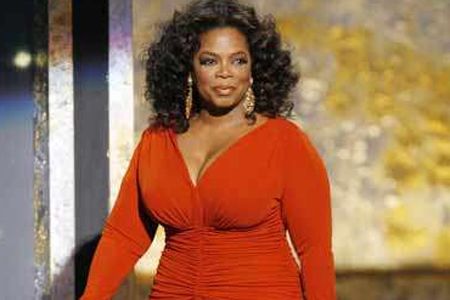
So I find myself subconsciously looking for theologians who will help me articulate the balance of recognizing that capitalistic consumerism is no more my savior than is a complete Amish rejection. Enter Kathryn Lofton and her work Oprah: The Gospel of an Icon. This interview is dated now, but the end of it points to something I value: Lofton's desires to explore how the American Dream is possibly corrupt. Duh, I mean, Yes! And yet we continue subscribing to the money mongering game of capitalism hoping (amidst our disdain for the rich) that the next time we play we will be the lucky ones who get rich quick.

Anyway, Lofton begins that for Oprah there is a symphonic way that consumption and religion are not in opposition to one another but in collaboration. She notes that in the past, American religious scholars have sought to untangle these ideas revealing their own ideas of what's sacred vs. profane. She gives us three principles for religion and culture:

1) religion in pop-culture. The crucifix in a pop music video.
2) pop culture in religion. The use of blogs by believers.
3) pop culture as religion. Fandom.

This is why Madonna was so offensive in the '80's (religion in pop culture) and mega-church malls were so annoying in the '90's (pop culture in religion), Lofton expains. The former is profane, the latter, crass commercialization of the sacred.

Like a Virgin
Willow Creek: my favorite megachurch


This is the part I underlined: If only we didn't imagine culture and religion as neatly divided, we may be less surprised by their ceaseless commingling. There have, as it turns out, always been pigeon sellers, in every temple.


Icon B
Icon A


I don't think the pigeon sellers in the temple bit is a copout. I constantly hear conservatives misquoting John's Jesus, "the poor will always be among you," in an effort to ignore the poor's plight—certainly not Lofton's point. This pigeon reference is not about ignoring the capitalistic ventures to continue engaging in consumeristic behaviors under the guise of generous gift-giving (ala Oprah), but instead, a finger pointing to the reality that the lines between American religion (especially Protestantism) and (pop)cultural memes are blurry at best. (If Niebuhr could have admitted this a half-century ago would contemporary Christians embrace culture differently today?)

And yet, neither does this merger, or blurring, or commingled reality of culture and religion (or whatever you want to label it) excuse those of us who seek value and meaning outside of American consumer culture, those of us who seek fandom in areas outside of pop culture but who also do not forbid pop culture (point #3, culture as religion). As a thirty-something, white, American, female, who rejects the promises of the American dream and who upholds the promise of the Beatitudes, how do I situate myself (and my parenting for that matter) in a way that neither over-values the accumulation of shit (i.e. material goods that pass away) nor under-values the call to be other-worldly, placing one's hope and esteem in a transcendent reality that stretches beyond the cosmos (figuratively speaking of course)? How do I do this?

Is it enough to reject Oprah's and TD Jakes' prosperity gospel?
Is it enough that I still use the first generation iPad (even though I also have an iPod, iPhone, Macbook Pro, and an old cracked-LCD Macbook)?
Is it enough when planning worship or imagining a new liturgical ritual that might appeal to the millennial generation that it embraces social justice concerns like not using an American mega-bank for our checking and savings accounts?

Don't answer. In my questioning I want to embrace the ambiguity. And realize further that the non-ubiquitous characteristics that I named at the start (the other core tenants of anabaptist belief) certainly supplement my efforts, or the efforts of the faith community, to live in culture, embrace culture, and push against culture when it needs redirecting. Right? Oprah's product is a practice, and her practice is her product. This is simplistic, bad theology. I will not be self-transformed by Oprah's or America's or Dr. Phil's or Nate Berkus' or Suzie Orman's product, but by the renewing of my mind (when I'm wearing my new dress from Anthropologie--kidding).

There will be more from me on this...I'm only through the first three chapters of Lofton and Oprah.